Sunday, February 9, 2020

Supernatural Means of Inducing Impotence: A Study in the Human Imagination Inspired by Fear

Copyright 2020 by Gary L. Pullman

 
Assisted by demons and by magic, witches could perform wonders. They often produced such marvelous feats as changing women into men, although, it was said, they were unable to do the opposite, transforming men into women, because, as R. E. L. Masters observes in Eros and Evil: The Sexual Psychopathology of Witchcraft, “it is the method of nature to add rather than to take away” (128). Apparently, although demons are, by nature, supernatural, their powers are, nevertheless, constrained by the “methods” of nature.

According to Masters, witches frequently practiced “ligature or the production of impotence by magical means” (128-129). They used various means. They might make a woman appear so repulsive that her looks would quench her man's desire (129). (Think of the bathtub scene in The Shining.) More often, witches and demons left men's libido unchanged, so that their victims could the more greatly suffer, being unable to satisfy their lusts (130).

Demons could also prevent intercourse by placing themselves between a couple, thereby preventing any physical contact between the man and the woman; could “freeze” lust; and could either cause the penis to remain flaccid or to be unable to “perform” in its erect state, “closing . . . the seminary ducts” (131).

Another tactic available to demons and their witches was said to be the theft of the male genitals themselves, either actually or by means of inducing an illusion to this effect, although this method was hotly debated (131-132). Masters declares that he has tried, with some success, to reproduce the illusion through hypnosis: “I have so managed that the subject could neither see nor feel his sex organ” (132).

As an alternative to blocking the seminal ducts, demons and witches could desensitize the penile nerves, making the organ incapable of assuming its erect state; could cause the semen “to congeal and become hard as rock, so that it could not flow out of his urethra”; shrink the organ “to a mere shriveled shred of flesh”; close the vagina to prevent the introduction of the penis; or cause the penis to retract into the man's abdomen (134).

One of the chief means of inducing impotence in human males was the “tying [of ] a knot in a cord . . . . and there were at least half a hundred different knots, each inflicting a different degree or form of impotence or frigidity,” permanent or temporary in its duration(135).


The same ingenuity of imagination that devised this array of magical means for inducing impotence also suggested a variety of cures. God Himself might intervene on behalf of the impotent man or the frigid woman; magic spells might be reversed through “confession,” remorse, making “the sign of the cross, humility, meditation, and a pilgrimage to a holy and venerable shrine; or, by urinating through her wedding ring, a wife might “undo the ligature” (136).

Witches might also provide methods of preventing such curses. Using “pagan amulets and charms” might do (that is, undo) the trick, and there were several from which to choose, including “phallic symbols” (an “upright knife and broomstick”); “bisexual symbols” (“a horse's skull, a goblin's foot and a pentagram”); or “vulva symbols” (“horseshoes and hag stones, or rocks with holes bored through them” (136). “A love potion or philtre” might overcome impotence or frigidity, or a witch might “restore” an impotent man's manhood after he agreed to “copulate with her.”

There was a limit to the powers of demons and witches to impose impotence and frigidity, however, set by God Himself, according to Johann Klein, and a reason for this limitation. As Masters summarizes the divine motive: “God in all his divine love and mercy would never allow such universal impotence or permit his beloved children to perish by so odious a means” (137).


This chapter, “Sexual magic,” of Masters's intriguing book shows, once again, how inventive the human imagination can become when a woman is threatened with or (monstrously, to be sure) subjected to torture until she “confesses” what her tormentors want to hear and the sexual repression of both the victims and the victimizers seek release through any means possible.

Certainly, no writer would or should subject him- or herself to such extremes, but imagining that the same fate could await one as thousands of women (and a relatively few men) suffered at the hands of the Inquisition during the Middle Ages could produce similarly imaginative and horrific “accounts” of supernatural activity, whether related to human sexuality, psychopathology, or some other sphere of human experience as it is represented in fantastic fiction, including the horror genre, which, unfortunately, is too often rife with “torture porn” misogyny, and sadomasochism.


The threat and fear of imminent death seems to have been a strong muse, indeed, for both women accused of witchcraft and for Scheherazade, the author of The One Thousand and One Nights.


Friday, February 7, 2020

"Eros and Evil": A Review of Medieval Beliefs about the Sex Lives of Witches and Demons

Copyright 2020 by Gary L. Pullman


 In Eros and Evil: The Sexual Psychopathology of Witchcraft, R. E. L. Masters supplies a focused historical account of what he describes as "the sex lore of witchcraft" (146). Such lore, he declares, contains "all the elements usually found in the pornographic and obscene work of literature" (147). The topics that Masters covers in his intriguing, frequently shocking, book testify to the accuracy of his assertion.


Detail of a drawing by Mark Blanton

Without going into detail, the first part of the 322-page volume reviews, among other topics, "the origins of incubi and succubi," demons who have sex with women and men, respectively; "the anatomy of the devil" and "the semen of the demon," which indicate that both demon penises and semen have decidedly strange, sometimes contradictory, properties; "offspring of demonality," among whom, Masters, naming names, reports, are included Plato, Alexander the Great, Charlemagne's daughter, and Martin Luther. Other topics are just as interesting--and bizarre.

The second part of the book seeks explanations for the strange beliefs about and the alleged practices of medieval witches and demons. Masters suggests that alcohol and drugs, blind faith, delusion, hallucinations, mass hysteria, mental illness, sexual repression, and superstition—and the torture inflicted upon suspected witches by members of the Inquisition—can account for these phenomena. Witches and demons need not apply. (Possibly, he should have included politics as well.)

Published in 1962, the psychological sources the author taps may be outdated, as are some of the concepts associated with that field of human endeavor; however, in general, his explanations as to the possible causes of the "witch craze" are, for the most part, credible and convincing, and Eros and Evil makes very interesting reading.

Detail of a drawing by Javier Gil

The book also gives readers and writers of supernatural horror a glimpse into the mad, mad world of the medieval mindset. It was (and is), in many ways, an unfamiliar, fantastic world in which witches and demons not only copulate and otherwise engage in a variety of sexual acts, many of which would at the time have been considered unnatural, perverse, and sinful, but the volume also acquaints its readers with such particulars as the anatomical nature of the damned and the ingenious solutions they developed to such problems as how to obtain and deposit semen (since, according to some theologians, demons could not supply this substance themselves). Such details can fire the imagination of writers of supernatural fiction.

 
Whether Ira Levin read Eros and Evil before he wrote Rosemary's Baby is unknown, to me, at least, but Masters's book would definitely have been a great resource for Levin's novel. It would be an equally invaluable source for other writers who want to be accurate as well as lascivious in describing the sex lives of witches and demons. It would also be a good read for artists who depict such shenanigans in illustrations, paintings, sculptures, or other visual or plastic media. For those who are interested in such art, Mark Blanton and Javier Gil are highly recommended (but be forewarned: their art is both "demonic" and lascivious!)

Tuesday, January 28, 2020

Women Writers: Greater than the Sum of Their Parts

Copyright 2020 by Gary L. Pullman

In Monster, She Wrote: The Women Who Pioneer Horror & Speculative Fiction, Lisa Kroger and Melanie R. Anderson contend that women writers' horror fiction was (and is) often of a "transgressive" nature, a reaction against women's "marginalization," as a form of "noncompliance" with the rules that a patriarchal society imposes upon women (9-10).
  
While it may be fallacious and simplistic to paint the lady writers of early horror fiction with so broad a brush, it may be true, in some cases, at least, that the impulse to write this particular type of horror fiction is, at times, at least, inspired by the motivation to rebel, if only in print.
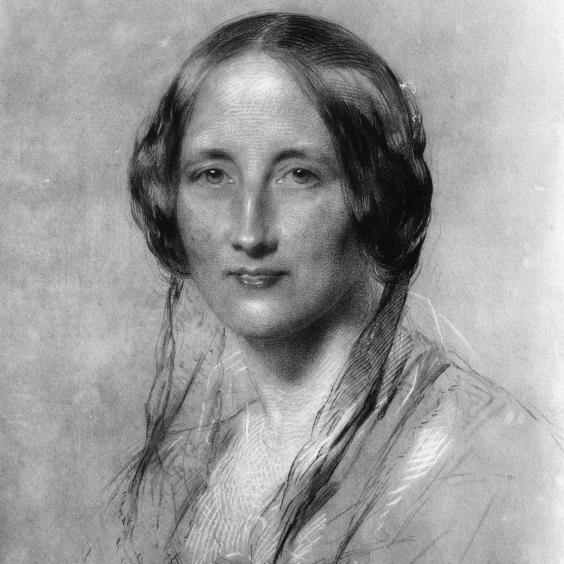
Elizabeth Gaskell
Certainly, women writers were early practitioners of domestic horror, and, as the authors of Murder, She Wrote observe, "women in the nineteenth century were expected to be good homemakers, both as wives and mothers" (53). Stories of ghosts provided a means of catharsis for Elizabeth Gaskell, allowing her to explore and criticize such themes as spousal abuse and patriarchal oppression.
Charlotte Dacre 
Vernon Lee


Sarah Waters


Jewelle Gomez
Kroger and Anderson's own glosses on the backgrounds of the women they feature in their review of women writers of horror fiction actually reveal a variety of inspirations for their writing, including an interest in erotica (Charlotte Dacre), a love of travel (Amelia Edwards), the repudiation of racism (Pauline E. Hopkins), lesbian leanings (Vernon Lee, Sarah Waters, and Jewelle Gomez), psychological instability (Edith Wharton), spiritualism (Margery Lawrence), the desire to live more imaginative lives, even if only in through the lives of the protagonists they themselves created (Everil Worrell), and a "personal struggle with . . . religious faith" (Anne Rice). 
Lisa Kroeger
Melanie R. Anderson
The authors of Monster, She Wrote, in writing about women writers of horror fiction, tend to characterize the authors the way that writers of fiction sometimes characterize the minor figures they create. As a result, Kroger and Anderson tend to reduce the authors to a single personality trait and their motivation to one or, at most, a few, impulses.
What works in genre fiction doesn't work in biography. A person is much more than a personality trait, and it is her whole life that motivates him or her, not just one or a few passionate interests. By reducing women writers to flat, mostly static characters, Kroger and Anderson do their literary "pioneers" (and their readers) a disservice.
However, the authors are ambitious, and their book provides a lot of other information besides the authors' biographical sketches of the women writers whom Kroger and Anderson profile. Though not without its flaws, Monster, She Wrote has enough good material to recommend itself highly to fans of the genre.


Tuesday, January 14, 2020

The Not-So-Gentle Sex

Copyright 2020 by Gary L. Pullman


Horace Walpole


Although Horace Walpole's 1764 novel of mistaken identities, The Castle of Otranto, is the first work of Gothic horror, women writers popularized the new genre.


Ann Radcliffe


Uncanny rather than marvelous, Ann Radcliffe's The Mysteries of Udolpho (1874) focuses on the attempt by her uncle to marry of the orphaned Emily St. Aubert to his friend, Count Morano, in a scheme to divest both his own wife and the count's bride of their property. Radcliffe (1764-1823) influenced several notable male authors, including Edgar Allan Poe (1809-1849).


Mary Shelley 


Not only did Mary Shelley (1797-1851) create a horror icon when she penned Frankenstein, or; The Modern Prometheus in 1818, but she may also have kept a part of the body of her late husband, the poet Percy Bysshe Shelley, as a memento. 


Charlotte Dacre


Charlotte Dacre (pen name of Charlotte Byrne) (c. 1771-1825) shocked the literary world of her day with the publication of her 1806 novel Zofloya; or, the Moor, a feminine version of Matthew Lewis's The Monk. Lewis's novel was regarded as salacious; it included a lusty monk and a cross dresser; Dacre's book, which was full of the adventures of harlots and courtesans, was even more scandalous.

Other volumes, as lascivious as Zofloya, followed, including The Libertine (1807) and The Passions (1811). The former was published under the pseudonym Rosa Matilda, a reference to a women who, seduced by Lewis's monk, became a seductress herself.

https://www.amazon.com/dp/B07M9HGBGV/ref=dp-kindle-redirect?_encoding=UTF8&btkr=1#reader_B07M9HGBGV
 
To read further about these authors of the not-so-gentle sex, check out the fascinating 2019 tome Monster, She Wrote: The Women Who Pioneered Horror and Speculative Fiction by Lisa Kroeger and Melanie R. Anderson.

Thursday, January 9, 2020

Chillers and Thrillers: New Publisher Sponsors Fiction Contest!

Chillers and Thrillers: New Publisher Sponsors Fiction Contest!: Coming in February to Campbell and Rogers Press : tales with a twist by Michael Williams. An eclectic collection of flash fiction, th...

The Tzvetan Todorov Plot

Copyright 2020 by Gary L. Pullman


In The Fantastic: A Structural Approach to a Literary Genre, Dr. Tzvetan Todorov differentiates between fiction that is fantastic, uncanny, or marvelous.

 
A story is fantastic, he says, if it cannot be resolved as either uncanny or marvelous. For example, at the end of Henry James's novel The Turn of the Screw (1898), it remains unclear whether the ghosts are real or simply products of the governess's hallucinations.


A story is uncanny if its seemingly fantastic incidents can be explained rationally or scientifically. According to this understanding, H. G. Wells's short story “The Red Room” (1894) is uncanny: the ghost that allegedly haunts the castle in which the protagonist has come to spend the night turns out to be the invention of his imagination, an effect of his fear.


A story is marvelous if its incidents cannot be rationally or scientifically explained. Stephen King's short story “1408” (1999) is marvelous, because the ghosts (or demons) that allegedly haunt the hotel room in which the writer spends the night are, in fact, truly supernatural.

Whether intentionally or not, Todorov offers a formula for plotting fantastic, uncanny, or marvelous fiction. It sounds complicated, but it's actually fairly simple. This is how it works:
  1. Develop a single situation that can be understood in either natural and or terms or that can be interpreted by reference to the supernatural or faith.
  2. During the course of the story, indicate that the situation may be supernatural.
  3. Show that the situation actually is supernatural or natural in origin of character or that the situation cannot be resolved in either way.
Fiction provides many models of this approach. Here are a few:


Uncanny:“The Damned Thing” (short story) (1893) by Ambrose Bierce; “The Premature Burial” (short story) by Edgar Allan Poe (1844); A Tough Tussle” (short story) by Ambrose Bierce (1888)


 Marvelous: The Exorcist (novel) (1971) by William Peter Blatty; The Sixth Sense (movie) (1999) directed by M. Night Shyamalan; “Dracula's Guest” (short story) (1914) by Bram Stoker


Fantastic: The Exorcism of Emily Rose (movie) (2005) directed by Scott Derrickson;“The Birds” (short story) (1955) by Daphne du Maurier; Let's Scare Jessica to Death (movie) (1971) directed by John Hancock

By analyzing these stories and others that use the Tzvetan Todorov plot, we can see what specific techniques their writers use to create and sustain the ambiguity that results from the tension between the two opposite interpretations of the stories' incidents, that of the natural and that of the supernatural.

Uncanny: In writing “The Red Room,” Wells withholds the actual (natural) cause of the allegedly supernatural incident (the ghost's haunting of the red room) that the protagonist investigates. By doing so, Wells allows the extinguishing of the candles and the fire in the room's fireplace to seem to be the work of the ghost. His panic causes him to run through the chamber in the dark, seeking escape, which results in his knocking himself unconscious when he collides with a piece of furniture. It is only upon awakening that he realizes that the red room was haunted only by his own fear-fueled imagination.


Marvelous: In The Exorcist, Regan MacNeil's strange behavior causes her mother Chris to seek both medical and psychiatric help for Regan after Chris cannot rationally account for Regan's behavior. Both sciences fail to help Regan, who becomes worse. To help Regan, Chris eventually turns to a priest, Father Damien Karras, despite her own atheism. Through exorcism, at the cost of his own life, Father Karras rids Regan of the demon that possesses her. By postponing the revelation that Regan's apparent demonic possession is, in fact, genuine, Blatty creates and sustains ambiguity as to whether the possession is apparent (the result of a physiological or mental disorder) or real.

Withholding the cause of the seemingly fantastic, as Wells does in “The Red Room,” or showing the failure of both reason and science to account for a seemingly supernatural incident before revealing that the incident actually is fantastic, as Blatty does, introduces the possibility of the fantastic while establishing it as subject to natural or rational interpretation or as genuinely marvelous. 

Other techniques that writers using what is here referred to as the Tzvetan Todorov plot include:
  • Swinging back and forth between the natural or scientific explanation of an incident that only at first appears to be marvelous and never explaining the incident's inexplicable mystery (i. e., implying its truly marvelous character).
  • Explaining, eventually, that the apparently fantastic incident is the result of a trick; it is a hoax, a prank, or a publicity stunt.
  • Explaining, eventually, that the apparently fantastic incident is the enactment of a rite or ritual performed by people who genuinely believe that the act is supernatural.
  • Confusing one state of affairs (e. g., a cataleptic trance) with another state of affairs (e. g., death).

Saturday, December 14, 2019

Scenes of Buddhist Hell

Copyright 2019 by Gary L. Pullman

Warning! Do not read this article unless you have a strong stomach!


Click the image to enlarge it.

Stark, horrific, and grotesque, the sets of statues are warnings to the faithful. In no uncertain terms, the sculptures show the fates of those whose bad karma caused them to be born in a place of long-term, but not eternal, torment in a layers of Naraka, the Buddhists' hell.


Click the image to enlarge it.

In one set of sculptures, skeletal figures are marched, chained together in single file, their bloody arms, spines, buttocks, and legs exhibiting holes that have been punched into them, toward a gigantic bowl-shaped pan atop skulls. A fire under the pan indicates its purpose: to cook the unfortunates who climb into the pan, unfurling long tongues as they dance in the burning vessel or lie with their arms folded over the pan's rim. Dark-skinned guards, armed with spears and sticks, guard the damned. One of guards lifts a cursed male figure over his head, ready to toss him into the pan with the others who share his doom.


Click the image to enlarge it.

Naraka is somewhat similar to the hell of Chinese mythology, upon which Naraka itself is based. Although the numbers of the layers, or courts, of the labyrinthine underworld differ among sources, some stating that there are three or four courts, others that there are ten, still another that there are eighteen, and yet others that there are thousands, the chief source for Naraka claims that there are Eight Cold Narakas and Eight Hot Narakas. Each has its unique form of punishment, several of which are depicted by the statues.


Click the image to enlarge it.

Some of the punishments of the Cold Narakas include suffering from blisters, experiencing splitting skin, and having the body itself crack open and expose the victims' internal organs, which also crack apart.


Click the image to enlarge it.

Among the torments of the Hot Narakas are being attacked with iron claws and fiery weapons, being showered with molten metal, being sliced into pieces, and having to walk and lie on the heated ground. Guards cut bodies into pieces with fiery saws and axes. The damned are crushed by rocks, burned alive, eaten by wild animals, impaled upon fiery spears, pierced by a trident, and roasted alive.

Each punishment, in both the Cold Narakas and the Hot Narakas, lasts from hundreds of millions to sextillions (1021) of years, and each lifetime in a Naraka lasts eight times longer than the previous one.


Click the image to enlarge it.

Some of the statues depict the suffering that the damned encounter in Diyu, the Chinese hell (or hells); others seem to portray the plight of the condemned in the Narakas. Among the former punishments are suggested by the names of a concept of Diyu as comprising eighteen hells: Hell of the Hanging Bars, Hell of the Pit of Fire, Hell of Tongue Ripping, Hell of Skinning, Hell of Grinding, Hell of Pounding, Hell of Dismemberment by Vehicles, Hell of Ice, Hell of Disembowelment, Hell of Oil Cauldrons, Hell of the Mountain of Knives, among them.


Click the image to enlarge it.

Some scenes involving the statues do not seem to match the descriptions in Buddhist scriptures concerning the nature of the Narakas, in which case the sculptures may, instead, represent various other hells in the Chinese Diyu. With thousands of hells, each group of statues likely represents one of the many places of Chinese, if not specifically Buddhist, torment.


Click the image to enlarge it.

The sculptors are not timid in displaying the flesh of the damned, and there is even some grim humor in the displays of some of the figure's torments, especially when the punishments apparently are for the commission of taboo sexual acts or harboring forbidden appetites of the flesh. Phalli, for example, are sometimes of gargantuan size, as if the organs, as symbols of prurient desire, weigh down those who bear them. One male figure appears unable to stand erect, because the enormous size and weight of his phallus causes him to stoop at all times. Another male figure also stoops, carrying his flaccid organ over his shoulder as he shuffles along, past a female figure whose bloody vulva is being consumed by a dog while another male figure, whose thoughts have too much been occupied by sexual fantasies, perhaps, looks on, as it were, his phallus having replaced his neck and head.


Click the image to enlarge it.

Oddly, the Asian figures are bright white; the only parts of their bodies to be represented in color are those of their sex organs: one male's is reddish brown; the others' members are dark brown. The female figure's vulva is red with the blood flowing from her half-devoured organs. The absence of colors except in regard to their sexual parts is intended, perhaps, to make their colorful, offending organs stand out all the more, by way of contrast.


Click the image to enlarge it.

Images of mutilation, impalement, distension, anatomical displacement (eyes in elbows and replacing nipples, a fanged mouth or a complete face in an abdomen), grinding, devouring, decapitation, hacking, disembowelment, tongue ripping, spearing, knifing, pressing, roasting, physical transformation, hooking, and dismemberment make it clear that Buddhism is not simply the mellow, intellectual, contemplative discipline that it is often portrayed as being and is often understood, especially by Westerners, to be. These statues testify to the fact that there is also a darker, brutal, sadomasochistic, and decidedly more sinister side to Buddhist tradition, doctrines, and beliefs.


Click the image to enlarge it.

Paranormal vs. Supernatural: What’s the Diff?

Copyright 2009 by Gary L. Pullman

Sometimes, in demonstrating how to brainstorm about an essay topic, selecting horror movies, I ask students to name the titles of as many such movies as spring to mind (seldom a difficult feat for them, as the genre remains quite popular among young adults). Then, I ask them to identify the monster, or threat--the antagonist, to use the proper terminology--that appears in each of the films they have named. Again, this is usually a quick and easy task. Finally, I ask them to group the films’ adversaries into one of three possible categories: natural, paranormal, or supernatural. This is where the fun begins.

It’s a simple enough matter, usually, to identify the threats which fall under the “natural” label, especially after I supply my students with the scientific definition of “nature”: everything that exists as either matter or energy (which are, of course, the same thing, in different forms--in other words, the universe itself. The supernatural is anything which falls outside, or is beyond, the universe: God, angels, demons, and the like, if they exist. Mad scientists, mutant cannibals (and just plain cannibals), serial killers, and such are examples of natural threats. So far, so simple.

What about borderline creatures, though? Are vampires, werewolves, and zombies, for example, natural or supernatural? And what about Freddy Krueger? In fact, what does the word “paranormal” mean, anyway? If the universe is nature and anything outside or beyond the universe is supernatural, where does the paranormal fit into the scheme of things?

According to the Online Etymology Dictionary, the word “paranormal,” formed of the prefix “para,” meaning alongside, and “normal,” meaning “conforming to common standards, usual,” was coined in 1920. The American Heritage Dictionary defines “paranormal” to mean “beyond the range of normal experience or scientific explanation.” In other words, the paranormal is not supernatural--it is not outside or beyond the universe; it is natural, but, at the present, at least, inexplicable, which is to say that science cannot yet explain its nature. The same dictionary offers, as examples of paranormal phenomena, telepathy and “a medium’s paranormal powers.”

Wikipedia offers a few other examples of such phenomena or of paranormal sciences, including the percentages of the American population which, according to a Gallup poll, believes in each phenomenon, shown here in parentheses: psychic or spiritual healing (54), extrasensory perception (ESP) (50), ghosts (42), demons (41), extraterrestrials (33), clairvoyance and prophecy (32), communication with the dead (28), astrology (28), witchcraft (26), reincarnation (25), and channeling (15); 36 percent believe in telepathy.

As can be seen from this list, which includes demons, ghosts, and witches along with psychics and extraterrestrials, there is a confusion as to which phenomena and which individuals belong to the paranormal and which belong to the supernatural categories. This confusion, I believe, results from the scientism of our age, which makes it fashionable for people who fancy themselves intelligent and educated to dismiss whatever cannot be explained scientifically or, if such phenomena cannot be entirely rejected, to classify them as as-yet inexplicable natural phenomena. That way, the existence of a supernatural realm need not be admitted or even entertained. Scientists tend to be materialists, believing that the real consists only of the twofold unity of matter and energy, not dualists who believe that there is both the material (matter and energy) and the spiritual, or supernatural. If so, everything that was once regarded as having been supernatural will be regarded (if it cannot be dismissed) as paranormal and, maybe, if and when it is explained by science, as natural. Indeed, Sigmund Freud sought to explain even God as but a natural--and in Freud’s opinion, an obsolete--phenomenon.

Meanwhile, among skeptics, there is an ongoing campaign to eliminate the paranormal by explaining them as products of ignorance, misunderstanding, or deceit. Ridicule is also a tactic that skeptics sometimes employ in this campaign. For example, The Skeptics’ Dictionary contends that the perception of some “events” as being of a paranormal nature may be attributed to “ignorance or magical thinking.” The dictionary is equally suspicious of each individual phenomenon or “paranormal science” as well. Concerning psychics’ alleged ability to discern future events, for example, The Skeptic’s Dictionary quotes Jay Leno (“How come you never see a headline like 'Psychic Wins Lottery'?”), following with a number of similar observations:

Psychics don't rely on psychics to warn them of impending disasters. Psychics don't predict their own deaths or diseases. They go to the dentist like the rest of us. They're as surprised and disturbed as the rest of us when they have to call a plumber or an electrician to fix some defect at home. Their planes are delayed without their being able to anticipate the delays. If they want to know something about Abraham Lincoln, they go to the library; they don't try to talk to Abe's spirit. In short, psychics live by the known laws of nature except when they are playing the psychic game with people.
In An Encyclopedia of Claims, Frauds, and Hoaxes of the Occult and Supernatural, James Randi, a magician who exercises a skeptical attitude toward all things alleged to be paranormal or supernatural, takes issue with the notion of such phenomena as well, often employing the same arguments and rhetorical strategies as The Skeptic’s Dictionary.

In short, the difference between the paranormal and the supernatural lies in whether one is a materialist, believing in only the existence of matter and energy, or a dualist, believing in the existence of both matter and energy and spirit. If one maintains a belief in the reality of the spiritual, he or she will classify such entities as angels, demons, ghosts, gods, vampires, and other threats of a spiritual nature as supernatural, rather than paranormal, phenomena. He or she may also include witches (because, although they are human, they are empowered by the devil, who is himself a supernatural entity) and other natural threats that are energized, so to speak, by a power that transcends nature and is, as such, outside or beyond the universe. Otherwise, one is likely to reject the supernatural as a category altogether, identifying every inexplicable phenomenon as paranormal, whether it is dark matter or a teenage werewolf. Indeed, some scientists dedicate at least part of their time to debunking allegedly paranormal phenomena, explaining what natural conditions or processes may explain them, as the author of The Serpent and the Rainbow explains the creation of zombies by voodoo priests.

Based upon my recent reading of Tzvetan Todorov's The Fantastic: A Structural Approach to the Fantastic, I add the following addendum to this essay.

According to Todorov:

The fantastic. . . lasts only as long as a certain hesitation [in deciding] whether or not what they [the reader and the protagonist] perceive derives from "reality" as it exists in the common opinion. . . . If he [the reader] decides that the laws of reality remain intact and permit an explanation of the phenomena described, we can say that the work belongs to the another genre [than the fantastic]: the uncanny. If, on the contrary, he decides that new laws of nature must be entertained to account for the phenomena, we enter the genre of the marvelous (The Fantastic: A Structural Approach to a Literary Genre, 41).
Todorov further differentiates these two categories by characterizing the uncanny as “the supernatural explained” and the marvelous as “the supernatural accepted” (41-42).

Interestingly, the prejudice against even the possibility of the supernatural’s existence which is implicit in the designation of natural versus paranormal phenomena, which excludes any consideration of the supernatural, suggests that there are no marvelous phenomena; instead, there can be only the uncanny. Consequently, for those who subscribe to this view, the fantastic itself no longer exists in this scheme, for the fantastic depends, as Todorov points out, upon the tension of indecision concerning to which category an incident belongs, the natural or the supernatural. The paranormal is understood, by those who posit it, in lieu of the supernatural, as the natural as yet unexplained.

And now, back to a fate worse than death: grading students’ papers.

My Cup of Blood

Anyone who becomes an aficionado of anything tends, eventually, to develop criteria for elements or features of the person, place, or thing of whom or which he or she has become enamored. Horror fiction--admittedly not everyone’s cuppa blood--is no different (okay, maybe it’s a little different): it, too, appeals to different fans, each for reasons of his or her own. Of course, in general, book reviews, the flyleaves of novels, and movie trailers suggest what many, maybe even most, readers of a particular type of fiction enjoy, but, right here, right now, I’m talking more specifically--one might say, even more eccentrically. In other words, I’m talking what I happen to like, without assuming (assuming makes an “ass” of “u” and “me”) that you also like the same. It’s entirely possible that you will; on the other hand, it’s entirely likely that you won’t.

Anyway, this is what I happen to like in horror fiction:

Small-town settings in which I get to know the townspeople, both the good, the bad, and the ugly. For this reason alone, I’m a sucker for most of Stephen King’s novels. Most of them, from 'Salem's Lot to Under the Dome, are set in small towns that are peopled by the good, the bad, and the ugly. Part of the appeal here, granted, is the sense of community that such settings entail.

Isolated settings, such as caves, desert wastelands, islands, mountaintops, space, swamps, where characters are cut off from civilization and culture and must survive and thrive or die on their own, without assistance, by their wits and other personal resources. Many are the examples of such novels and screenplays, but Alien, The Shining, The Descent, Desperation, and The Island of Dr. Moreau, are some of the ones that come readily to mind.

Total institutions as settings. Camps, hospitals, military installations, nursing homes, prisons, resorts, spaceships, and other worlds unto themselves are examples of such settings, and Sleepaway Camp, Coma, The Green Mile, and Aliens are some of the novels or films that take place in such settings.

Anecdotal scenes--in other words, short scenes that showcase a character--usually, an unusual, even eccentric, character. Both Dean Koontz and the dynamic duo, Douglas Preston and Lincoln Child, excel at this, so I keep reading their series (although Koontz’s canine companions frequently--indeed, almost always--annoy, as does his relentless optimism).

Atmosphere, mood, and tone. Here, King is king, but so is Bentley Little. In the use of description to terrorize and horrify, both are masters of the craft.

Believable characters. Stephen King, Douglas Preston and Lincoln Child, and Dan Simmons are great at creating characters that stick to readers’ ribs.

Innovation. Bram Stoker demonstrates it, especially in his short story “Dracula’s Guest,” as does H. P. Lovecraft, Edgar Allan Poe, Shirley Jackson, and a host of other, mostly classical, horror novelists and short story writers. For an example, check out my post on Stoker’s story, which is a real stoker, to be sure. Stephen King shows innovation, too, in ‘Salem’s Lot, The Shining, It, and other novels. One might even argue that Dean Koontz’s something-for-everyone, cross-genre writing is innovative; he seems to have been one of the first, if not the first, to pen such tales.

Technique. Check out Frank Peretti’s use of maps and his allusions to the senses in Monster; my post on this very topic is worth a look, if I do say so myself, which, of course, I do. Opening chapters that accomplish a multitude of narrative purposes (not usually all at once, but successively) are attractive, too, and Douglas Preston and Lincoln Child are as good as anyone, and better than many, at this art.

A connective universe--a mythos, if you will, such as both H. P. Lovecraft and Stephen King, and, to a lesser extent, Dean Koontz, Bentley Little, and even Douglas Preston and Lincoln Child have created through the use of recurring settings, characters, themes, and other elements of fiction.

A lack of pretentiousness. Dean Koontz has it, as do Douglas Preston and Lincoln Child, Bentley Little, and (to some extent, although he has become condescending and self-indulgent of late, Stephen King); unfortunately, both Dan Simmons and Robert McCammon have become too self-important in their later works, Simmons almost to the point of becoming unreadable. Come on, people, you’re writing about monsters--you should be humble.

Longevity. Writers who have been around for a while usually get better, Stephen King, Dan Simmons, and Robert McCammon excepted.

Pacing. Neither too fast nor too slow. Dean Koontz is good, maybe the best, here, of contemporary horror writers.