Many settings are isolated: castles, caves, colonies, islands, military outposts, mountaintops, prisons, and scientific research laboratories resorts, to name but a few. Of course, these settings suggest whole casts of characters that are appropriate them as well. There is apt to be a knight or king in a story that is set in a castle, bit not in a story that takes place in a scientific research laboratory, remote or otherwise. These characters may also suggest an appropriate conflict and an fitting theme for the story: knights (or a king) may undertake a quest that tests their mettle, their values, or both, just as scientists may seek to cure a dreadful disease, showing, in the process, how science can improve and prolong human life even if, at times, its boons are not quite as recognizable.
Symbolically, an isolated setting can represent desertion or abandonment. A character may be purposely discarded, as infants sometimes were in ancient Greek or Roman societies, as was Oedipus (or, for that matter, as Moses was in the book of Exodus), a child of lowly birth becoming a member of an empire or a royal court or an outcast of the same. Exiles may become hermits, dwelling in remote and forbidding environments. Such stories’ themes are likely to investigate the nature, causes, effects, and implications of desertion or abandonment both upon the societies that cast off and upon the castoffs themselves. In horror fiction, none of these elements is apt to be delightful or mundane, and self-esteem is probably going to be the least casualty of many others, both physical and spiritual.
Another way in which a character may be isolated is psychologically. If a character is insane or is going insane, he or she is, in some important and horrific ways, even if surrounded by the company of others, already alone, already distant, and already alienated from society, civilization, and culture, as the examples of the protagonists of “The Hungry Stones,” “The Yellow Wallpaper,” “The Tell-tale Heart,” The Rime of the Ancient Mariner, The Island of Dr. Moreau, and many other tales of terror indicate.
To provide a more detailed sense of how an isolated setting can create both a sense of mystery and doom, we have included three short stories in which the action takes place in remote locations:
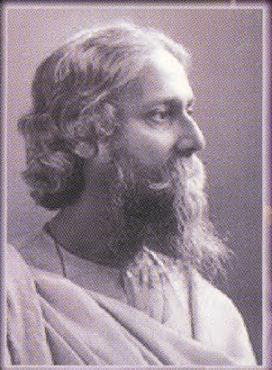
The Hungry Stones
By Rabindranath Tagore
When the train reached the junction, we assembled in the waiting-room for the connection. It was then 10 P. M., and as the train, we heard, was likely to be very late, owing to something wrong in the lines, I spread my bed on the table and was about to lie down for a comfortable doze, when the extraordinary person deliberately set about spinning the following yarn. Of course, I could get no sleep that night.
When, owing to a disagreement about some questions of administrative policy, I threw up my post at Junagarh, and entered the service of the Nizam of Hyderabad, they appointed me at once, as a strong young man, collector of cotton duties at Barich.
Barich is a lovely place. The Susta "chatters over stony ways and babbles on the pebbles," tripping, like a skilful dancing girl, in through the woods below the lonely hills. A flight of 150 steps rises from the river, and above that flight, on the river's brim and at the foot of the hills, there stands a solitary marble palace. Around it there is no habitation of man--the village and the cotton mart of Barich being far off.
About 250 years ago the Emperor Mahmud Shah II. had built this lonely palace for his pleasure and luxury. In his days jets of rose-water spurted from its fountains, and on the cold marble floors of its spray-cooled rooms young Persian damsels would sit, their hair dishevelled before bathing, and, splashing their soft naked feet in the clear water of the reservoirs, would sing, to the tune of the guitar, the ghazals of their vineyards.
The fountains play no longer; the songs have ceased; no longer do snow-white feet step gracefully on the snowy marble. It is but the vast and solitary quarters of cess-collectors like us, men oppressed with solitude and deprived of the society of women. Now, Karim Khan, the old clerk of my office, warned me repeatedly not to take up my abode there. "Pass the day there, if you like," said he, "but never stay the night." I passed it off with a light laugh. The servants said that they would work till dark, and go away at night. I gave my ready assent. The house had such a bad name that even thieves would not venture near it after dark.
At first the solitude of the deserted palace weighed upon me like a nightmare. I would stay out, and work hard as long as possible, then return home at night jaded and tired, go to bed and fall asleep.
Before a week had passed, the place began to exert a weird fascination upon me. It is difficult to describe or to induce people to believe; but I felt as if the whole house was like a living organism slowly and imperceptibly digesting me by the action of some stupefying gastric juice.
Perhaps the process had begun as soon as I set my foot in the house, but I distinctly remember the day on which I first was conscious of it.
It was the beginning of summer, and the market being dull I had no work to do. A little before sunset I was sitting in an arm-chair near the water's edge below the steps. The Susta had shrunk and sunk low; a broad patch of sand on the other side glowed with the hues of evening; on this side the pebbles at the bottom of the clear shallow waters were glistening. There was not a breath of wind anywhere, and the still air was laden with an oppressive scent from the spicy shrubs growing on the hills close by.
As the sun sank behind the hill-tops a long dark curtain fell upon the stage of day, and the intervening hills cut short the time in which light and shade mingle at sunset. I thought of going out for a ride, and was about to get up when I heard a foot-fall on the steps behind. I looked back, but there was no one.
As I sat down again, thinking it to be an illusion, I heard many footfalls, as if a large number of persons were rushing down the steps. A strange thrill of delight, slightly tinged with fear, passed through my frame, and though there was not a figure before my eyes, methought I saw a bevy of joyous maidens coming down the steps to bathe in the Susta in that summer evening. Not a sound was in the valley, in the river, or in the palace, to break the silence, but I distinctly heard the maidens' gay and mirthful laugh, like the gurgle of a spring gushing forth in a hundred cascades, as they ran past me, in quick playful pursuit of each other, towards the river, without noticing me at all. As they were invisible to me, so I was, as it were, invisible to them. The river was perfectly calm, but I felt that its still, shallow, and clear waters were stirred suddenly by the splash of many an arm jingling with bracelets, that the girls laughed and dashed and spattered water at one another, that the feet of the fair swimmers tossed the tiny waves up in showers of pearl.
I felt a thrill at my heart--I cannot say whether the excitement was due to fear or delight or curiosity. I had a strong desire to see them more clearly, but naught was visible before me; I thought I could catch all that they said if I only strained my ears; but however hard I strained them, I heard nothing but the chirping of the cicadas in the woods. It seemed as if a dark curtain of 250 years was hanging before me, and I would fain lift a corner of it tremblingly and peer through, though the assembly on the other side was completely enveloped in darkness.
The oppressive closeness of the evening was broken by a sudden gust of wind, and the still surface of the Susta rippled and curled like the hair of a nymph, and from the woods wrapt in the evening gloom there came forth a simultaneous murmur, as though they were awakening from a black dream. Call it reality or dream, the momentary glimpse of that invisible mirage reflected from a far-off world, 250 years old, vanished in a flash. The mystic forms that brushed past me with their quick unbodied steps, and loud, voiceless laughter, and threw themselves into the river, did not go back wringing their dripping robes as they went. Like fragrance wafted away by the wind they were dispersed by a single breath of the spring.
Then I was filled with a lively fear that it was the Muse that had taken advantage of my solitude and possessed me--the witch had evidently come to ruin a poor devil like myself making a living by collecting cotton duties. I decided to have a good dinner--it is the empty stomach that all sorts of incurable diseases find an easy prey.
As I saw no one I stood bewildered, my hair on end in a kind of ecstatic delight, and a faint scent of attar and unguents almost effaced by age lingered in my nostrils. Standing in the darkness of that vast desolate hall between the rows of those ancient pillars, I could hear the gurgle of fountains plashing on the marble floor, a strange tune on the guitar, the jingle of ornaments and the tinkle of anklets, the clang of bells tolling the hours, the distant note of nahabat, the din of the crystal pendants of chandeliers shaken by the breeze, the song of bulbuls from the cages in the corridors, the cackle of storks in the gardens, all creating round me a strange unearthly music.
Then I came under such a spell that this intangible, inaccessible, unearthly vision appeared to be the only reality in the world--and all else a mere dream. That I, that is to say, Srijut So-and-so, the eldest son of So-and-so of blessed memory, should be drawing a monthly salary of Rs. 450 by the discharge of my duties as collector of cotton duties, and driving in my dog-cart to my office every day in a short coat and sola hat, appeared to me to be such an astonishingly ludicrous illusion that I burst into a horse-laugh, as I stood in the gloom of that vast silent hall.
At that moment my servant entered with a lighted kerosene lamp in his hand. I do not know whether he thought me mad, but it came back to me at once that I was in very deed Srijut So-and-so, son of So-and-so of blessed memory, and that, while our poets, great and small, alone could say whether inside or outside the earth there was a region where unseen fountains perpetually played and fairy guitars, struck by invisible fingers, sent forth an eternal harmony, this at any rate was certain, that I collected duties at the cotton market at Barich, and earned thereby Rs. 450 per mensem as my salary. I laughed in great glee at my curious illusion, as I sat over the newspaper at my camp-table, lighted by the kerosene lamp.
After I had finished my paper and eaten my moghlai dinner, I put out the lamp, and lay down on my bed in a small side-room. Through the open window a radiant star, high above the Avalli hills skirted by the darkness of their woods, was gazing intently from millions and millions of miles away in the sky at Mr. Collector lying on a humble camp-bedstead. I wondered and felt amused at the idea, and do not know when I fell asleep or how long I slept; but I suddenly awoke with a start, though I heard no sound and saw no intruder--only the steady bright star on the hilltop had set, and the dim light of the new moon was stealthily entering the room through the open window, as if ashamed of its lntrusion.
I saw nobody, but felt as if some one was gently pushing me. As I awoke she said not a word, but beckoned me with her five fingers bedecked with rings to follow her cautiously. I got up noiselessly, and, though not a soul save myself was there in the countless apartments of that deserted palace with its slumbering sounds and waking echoes, I feared at every step lest any one should wake up. Most of the rooms of the palace were always kept closed, and I had never entered them.
I followed breathless and with silent steps my invisible guide--I cannot now say where. What endless dark and narrow passages, what long corridors, what silent and solemn audience-chambers and close secret cells I crossed!
Though I could not see my fair guide, her form was not invisible to my mind's eye,--an Arab girl, her arms, hard and smooth as marble, visible through her loose sleeves, a thin veil falling on her face from the fringe of her cap, and a curved dagger at her waist! Methought that one of the thousand and one Arabian Nights had been wafted to me from the world of romance, and that at the dead of night I was wending my way through the dark narrow alleys of slumbering Bagdad to a trysting-place fraught with peril.
At last my fair guide stopped abruptly before a deep blue screen, and seemed to point to something below. There was nothing there, but a sudden dread froze the blood in my heart--methought I saw there on the floor at the foot of the screen a terrible negro eunuch dressed in rich brocade, sitting and dozing with outstretched legs, with a naked sword on his lap. My fair guide lightly tripped over his legs and held up a fringe of the screen. I could catch a glimpse of a part of the room spread with a Persian carpet--some one was sitting inside on a bed--I could not see her, but only caught a glimpse of two exquisite feet in gold-embroidered slippers, hanging out from loose saffron-coloured paijamas and placed idly on the orange-coloured velvet carpet. On one side there was a bluish crystal tray on which a few apples, pears, oranges, and bunches of grapes in plenty, two small cups and a gold-tinted decanter were evidently awaiting the guest. A fragrant intoxicating vapour, issuing from a strange sort of incense that burned within, almost overpowered my senses.
As with trembling heart I made an attempt to step across the outstretched legs of the eunuch, he woke up suddenly with a start, and the sword fell from his lap with a sharp clang on the marble floor.
A terrific scream made me jump, and I saw I was sitting on that camp-bedstead of mine sweating heavily; and the crescent moon looked pale in the morning light like a weary sleepless patient at dawn; and our crazy Meher Ali was crying out, as is his daily custom, "Stand back! Stand back!!" while he went along the lonely road.
Such was the abrupt close of one of my Arabian Nights; but there were yet a thousand nights left.
Then followed a great discord between my days and nights. During the day I would go to my work worn and tired, cursing the bewitching night and her empty dreams, but as night came my daily life with its bonds and shackles of work would appear a petty, false, ludicrous vanity.
After nightfall I was caught and overwhelmed in the snare of a strange intoxication. I would then be transformed into some unknown personage of a bygone age, playing my part in unwritten history; and my short English coat and tight breeches did not suit me in the least. With a red velvet cap on my head, loose paijamas, an embroidered vest, a long flowing silk gown, and coloured handkerchiefs scented with attar, I would complete my elaborate toilet, sit on a high-cushioned chair, and replace my cigarette with a many-coiled narghileh filled with rose-water, as if in eager expectation of a strange meeting with the beloved one.
I have no power to describe the marvellous incidents that unfolded themselves, as the gloom of the night deepened. I felt as if in the curious apartments of that vast edifice the fragments of a beautiful story, which I could follow for some distance, but of which I could never see the end, flew about in a sudden gust of the vernal breeze. And all the same I would wander from room to room in pursuit of them the whole night long.
Amid the eddy of these dream-fragments, amid the smell of henna and the twanging of the guitar, amid the waves of air charged with fragrant spray, I would catch like a flash of lightning the momentary glimpse of a fair damsel. She it was who had saffron-coloured paijamas, white ruddy soft feet in gold-embroidered slippers with curved toes, a close-fitting bodice wrought with gold, a red cap, from which a golden frill fell on her snowy brow and cheeks.
She had maddened me. In pursuit of her I wandered from room to room, from path to path among the bewildering maze of alleys in the enchanted dreamland of the nether world of sleep.
Sometimes in the evening, while arraying myself carefully as a prince of the blood-royal before a large mirror, with a candle burning on either side, I would see a sudden reflection of the Persian beauty by the side of my own. A swift turn of her neck, a quick eager glance of intense passion and pain glowing in her large dark eyes, just a suspicion of speech on her dainty red lips, her figure, fair and slim, crowned with youth like a blossoming creeper, quickly uplifted in her graceful tilting gait, a dazzling flash of pain and craving and esctasy, a smile and a glance and a blaze of jewels and silk, and she melted away. A wild gust of wind, laden with all the fragrance of hills and woods, would put out my light, and I would fling aside my dress and lie down on my bed, my eyes closed and my body thrilling with delight, and there around me in the breeze, amid all the perfume of the woods and hills, floated through the silent gloom many a caress and many a kiss and many a tender touch of hands, and gentle murmurs in my ears, and fragrant breaths on my brow; or a sweetly-perfumed kerchief was wafted again and again on my cheeks. Then slowly a mysterious serpent would twist her stupefying coils about me; and heaving a heavy sigh, I would lapse into insensibility, and then into a profound slumber.
One evening I decided to go out on my horse--I do not know who implored me to stay--but I would listen to no entreaties that day. My English hat and coat were resting on a rack, and I was about to take them down when a sudden whirlwind, crested with the sands of the Susta and the dead leaves of the Avalli hills, caught them up, and whirled them round and round, while a loud peal of merry laughter rose higher and higher, striking all the chords of mirth till it died away in the land of sunset.
I could not go out for my ride, and the next day I gave up my queer English coat and hat for good.
That day again at dead of night I heard the stifled heart-breaking sobs of some one--as if below the bed, below the floor, below the stony foundation of that gigantic palace, from the depths of a dark damp grave, a voice piteously cried and implored me: "Oh, rescue me! Break through these doors of hard illusion, deathlike slumber and fruitless dreams, place me by your side on the saddle, press me to your heart, and, riding through hills and woods and across the river, take me to the warm radiance of your sunny rooms above!"
Who am I? Oh, how can I rescue thee? What drowning beauty, what incarnate passion shall I drag to the shore from this wild eddy of dreams? O lovely ethereal apparition! Where didst thou flourish and when? By what cool spring, under the shade of what date-groves, wast thou born--in the lap of what homeless wanderer in the desert? What Bedouin snatched thee from thy mother's arms, an opening bud plucked from a wild creeper, placed thee on a horse swift as lightning, crossed the burning sands, and took thee to the slave-market of what royal city? And there, what officer of the Badshah, seeing the glory of thy bashful blossoming youth, paid for thee in gold, placed thee in a golden palanquin, and offered thee as a present for the seraglio of his master? And O, the history of that place! The music of the sareng, the jingle of anklets, the occasional flash of daggers and the glowing wine of Shiraz poison, and the piercing flashing glance! What infinite grandeur, what endless servitude! The slave-girls to thy right and left waved the chamar, as diamonds flashed from their bracelets; the Badshah, the king of kings, fell on his knees at thy snowy feet in bejewelled shoes, and outside the terrible Abyssinian eunuch, looking like a messenger of death, but clothed like an angel, stood with a naked sword in his hand! Then, O, thou flower of the desert, swept away by the blood-stained dazzling ocean of grandeur, with its foam of jealousy, its rocks and shoals of intrigue, on what shore of cruel death wast thou cast, or in what other land more splendid and more cruel?
Suddenly at this moment that crazy Meher Ali screamed out: "Stand back! Stand back!! All is false! All is false!!" I opened my eyes and saw that it was already light. My chaprasi came and handed me my letters, and the cook waited with a salam for my orders.
I said: "No, I can stay here no longer." That very day I packed up, and moved to my office. Old Karim Khan smiled a little as he saw me. I felt nettled, but said nothing, and fell to my work.
As evening approached I grew absent-minded; I felt as if I had an appointment to keep; and the work of examining the cotton accounts seemed wholly useless; even the Nizamat of the Nizam did not appear to be of much worth. Whatever belonged to the present, whatever was moving and acting and working for bread seemed trivial, meaningless, and contemptible.
I threw my pen down, closed my ledgers, got into my dog-cart, and drove away. I noticed that it stopped of itself at the gate of the marble palace just at the hour of twilight. With quick steps I climbed the stairs, and entered the room.
A heavy silence was reigning within. The dark rooms were looking sullen as if they had taken offence. My heart was full of contrition, but there was no one to whom I could lay it bare, or of whom I could ask forgiveness. I wandered about the dark rooms with a vacant mind. I wished I had a guitar to which I could sing to the unknown: "O fire, the poor moth that made a vain effort to fly away has come back to thee! Forgive it but this once, burn its wings and consume it in thy flame!"
The gloomy the sooty waters of the Susta were waiting in terrible suspense and in an ominous calm. Suddenly land, water, and sky shivered, and a wild tempest-blast rushed howling through the distant pathless woods, showing its lightning-teeth like a raving maniac who had broken his chains. The desolate halls of the palace banged their doors, and moaned in the bitterness of anguish.
The servants were all in the office, and there was no one to light the lamps. The night was cloudy and moonless. In the dense gloom within I could distinctly feel that a woman was lying on her face on the carpet below the bed--clasping and tearing her long dishevelled hair with desperate fingers. Blood was trickling down her fair brow, and she was now laughing a hard, harsh, mirthless laugh, now bursting into violent wringing sobs, now rending her bodice and striking at her bare bosom, as the wind roared in through the open window, and the rain poured in torrents and soaked her through and through.
All night there was no cessation of the storm or of the passionate cry. I wandered from room to room in the dark, with unavailing sorrow. Whom could I console when no one was by? Whose was this intense agony of sorrow? Whence arose this inconsolable grief?
And the mad man cried out: "Stand back! Stand back!! All is false! All is false!"
I saw that the day had dawned, and Meher Ali was going round and round the palace with his usual cry in that dreadful weather. Suddenly it came to me that perhaps he also had once lived in that house, and that, though he had gone mad, he came there every day, and went round and round, fascinated by the weird spell cast by the marble demon.
Despite the storm and rain I ran to him and asked: "Ho, Meher Ali, what is false?"
The man answered nothing, but pushing me aside went round and round with his frantic cry, like a bird flying fascinated about the jaws of a snake, and made a desperate effort to warn himself by repeating: "Stand back! Stand back!! All is false! All is false!!"
I ran like a mad man through the pelting rain to my office, and asked Karim Khan: "Tell me the meaning of all this!"
What I gathered from that old man was this: That at one time countless unrequited passions and unsatisfied longings and lurid flames of wild blazing pleasure raged within that palace, and that the curse of all the heart-aches and blasted hopes had made its every stone thirsty and hungry, eager to swallow up like a famished ogress any living man who might chance to approach. Not one of those who lived there for three consecutive nights could escape these cruel jaws, save Meher Ali, who had escaped at the cost of his reason.
I asked: "Is there no means whatever of my release?" The old man said: "There is only one means, and that is very difficult. I will tell you what it is, but first you must hear the history of a young Persian girl who once lived in that pleasure-dome. A stranger or a more bitterly heart-rending tragedy was never enacted on this earth."
Just at this moment the coolies announced that the train was coming. So soon? We hurriedly packed up our luggage, as the train steamed in. An English gentleman, apparently just aroused from slumber, was looking out of a first-class carriage endeavouring to read the name of the station. As soon as he caught sight of our fellow-passenger, he cried, "Hallo," and took him into his own compartment. As we got into a second-class carriage, we had no chance of finding out who the man was nor what was the end of his story.
I said: "The man evidently took us for fools and imposed upon us out of fun. The story is pure fabrication from start to finish." The discussion that followed ended in a lifelong rupture between my theosophist kinsman and myself.
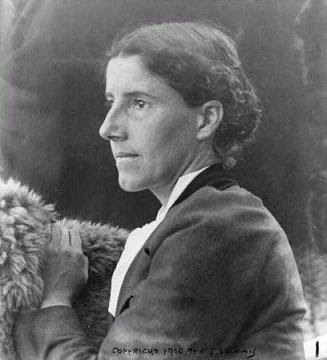
By Charlotte Perkins Gilman
It is very seldom that mere ordinary people like John and myself secure ancestral halls for the summer.
A colonial mansion, a hereditary estate, I would say a haunted house, and reach the height of romantic felicity—but that would be asking too much of fate!
Still I will proudly declare that there is something queer about it.
Else, why should it be let so cheaply? And why have stood so long untenanted?
John laughs at me, of course, but one expects that in marriage.
John is practical in the extreme. He has no patience with faith, an intense horror of superstition, and he scoffs openly at any talk of things not to be felt and seen and put down in figures.
John is a physician, and perhaps—(I would not say it to a living soul, of course, but this is dead paper and a great relief to my mind)—perhaps that is one reason I do not get well faster.
You see, he does not believe I am sick!
And what can one do?
If a physician of high standing, and one's own husband, assures friends and relatives that there is really nothing the matter with one but temporary nervous depression—a slight hysterical tendency—what is one to do?
My brother is also a physician, and also of high standing, and he says the same thing.
So I take phosphates or phosphites—whichever it is, and tonics, and journeys, and air, and exercise, and am absolutely forbidden to "work" until I am well again.
Personally, I disagree with their ideas.
Personally, I believe that congenial work, with excitement and change, would do me good.
But what is one to do?
I did write for a while in spite of them; but it does exhaust me a good deal—having to be so sly about it, or else meet with heavy opposition.
I sometimes fancy that my condition if I had less opposition and more society and stimulus--but John says the very worst thing I can do is to think about my condition, and I confess it always makes me feel bad.
So I will let it alone and talk about the house.
The most beautiful place! It is quite alone, standing well back from the road, quite three miles from the village. It makes me think of English places that you read about, for there are hedges and walls and gates that lock, and lots of separate little houses for the gardeners and people.
There is a delicious garden! I never saw such a garden—large and shady, full of box-bordered paths, and lined with long grape-covered arbors with seats under them.
There were greenhouses, too, but they are all broken now.
There was some legal trouble, I believe, something about the heirs and coheirs; anyhow, the place has been empty for years.
That spoils my ghostliness, I am afraid, but I don't care—there is something strange about the house—I can feel it.
I even said so to John one moonlight evening, but he said what I felt was a draught, and shut the window.
I get unreasonably angry with John sometimes. I'm sure I never used to be so sensitive. I think it is due to this nervous condition.
But John says if I feel so, I shall neglect proper self-control; so I take pains to control myself—before him, at least, and that makes me very tired.
I don't like our room a bit. I wanted one downstairs that opened on the piazza and had roses all over the window, and such pretty old-fashioned chintz hangings! but
John would not hear of it.
He said there was only one window and not room for two beds, and no near room for him if he took another.
He is very careful and loving, and hardly lets me stir without special direction.
I have a schedule prescription for each hour in the day; he takes all care from me, and so I feel basely ungrateful not to value it more.
He said we came here solely on my account, that I was to have perfect rest and all the air I could get. "Your exercise depends on your strength, my dear," said he, "and your food somewhat on your appetite; but air you can absorb all the time." So we took the nursery at the top of the house.
It is a big, airy room, the whole floor nearly, with windows that look all ways, and air and sunshine galore. It was nursery first and then playroom and gymnasium, I should judge; for the windows are barred for little children, and there are rings and
things in the walls.
The paint and paper look as if a boys' school had used it. It is stripped off—the paper—in great patches all around the head of my bed, about as far as I can reach, and in a great place on the other side of the room low down. I never saw a worse paper in my life.
One of those sprawling flamboyant patterns committing every artistic sin.
It is dull enough to confuse the eye in following, pronounced enough to constantly irritate and provoke study, and when you follow the lame uncertain curves for a little distance they suddenly commit suicide—plunge off at outrageous angles, destroy themselves in unheard of contradictions.
The color is repelllent, almost revolting; a smouldering unclean yellow, strangely faded by the slow-turning sunlight.
It is a dull yet lurid orange in some places, a sickly sulphur tint in others.
No wonder the children hated it! I should hate it myself if I had to live in this room long.
There comes John, and I must put this away,—he hates to have me write a word.
We have been here two weeks, and I haven't felt like writing before, since that first day.
I am sitting by the window now, up in this atrocious nursery, and there is nothing to hinder my writing as much as I please, save lack of strength.
John is away all day, and even some nights when his cases are serious.
I am glad my case is not serious!
But these nervous troubles are dreadfully depressing.
John does not know how much I really suffer. He knows there is no reason to suffer, and that satisfies him.
Of course it is only nervousness. It does weigh on me so not to do my duty in any way!
I meant to be such a help to John, such a real rest and comfort, and here I am a comparative burden already!
Nobody would believe what an effort it is to do what little I am able,—to dress and entertain, and other things.
It is fortunate Mary is so good with the baby. Such a dear baby!
And yet I cannot be with him, it makes me so nervous.
I suppose John never was nervous in his life. He laughs at me so about this wall-paper!
At first he meant to repaper the room, but afterwards he said that I was letting it get the better of me, and that nothing was worse for a nervous patient than to give way to such fancies.
He said that after the wall-paper was changed it would be the heavy bedstead, and then the barred windows, and then that gate at the head of the stairs, and so on.
"You know the place is doing you good," he said, "and really, dear, I don't care to renovate the house just for a three months' rental."
"Then do let us go downstairs," I said, "there are such pretty rooms there."
Then he took me in his arms and called me a blessed little goose, and said he would go down to the cellar, if I wished, and have it whitewashed into the bargain.
But he is right enough about the beds and windows and things.
It is an airy and comfortable room as any one need wish, and, of course, I would not be so silly as to make him uncomfortable just for a whim.
I'm really getting quite fond of the big room, all but that horrid paper.
Out of one window I can see the garden, those mysterious deepshaded arbors, the riotous old-fashioned flowers, and bushes and gnarly trees.
Out of another I get a lovely view of the bay and a little private wharf belonging to the estate. There is a beautiful shaded lane that runs down there from the house. I always fancy I see people walking in these numerous paths and arbors, but John has cautioned me not to give way to fancy in the least. He says that with my imaginative power and habit of story-making, a nervous weakness like mine is sure to lead to all manner of excited fancies, and that I ought to use my will and good sense to check the tendency. So I try.
I think sometimes that if I were only well enough to write a little it would relieve the press of ideas and rest me.
But I find I get pretty tired when I try.
It is so discouraging not to have any advice and companionship about my work.
When I get really well, John says we will ask Cousin Henry and Julia down for a long visit; but he says he would as soon put fireworks in my pillow-case as to let me have those stimulating people about now.
I wish I could get well faster.
But I must not think about that. This paper looks to me as if it knew what a vicious
influence it had!
There is a recurrent spot where the pattern lolls like a broken neck and two bulbous eyes stare at you upside down.
I get positively angry with the impertinence of it and the everlastingness. Up and down and sideways they crawl, and those absurd, unblinking eyes are everywhere.
There is one place where two breadths didn't match, and the eyes go all up and down the line, one a little higher than the other.
I never saw so much expression in an inanimate thing before, and we all know how much expression they have! I used to lie awake as a child and get more entertainment and terror out of blank walls and plain furniture than most children could find in a toy store.
I remember what a kindly wink the knobs of our big, old bureau used to have, and there was one chair that always seemed like a strong friend.
I used to feel that if any of the other things looked too fierce I could always hop into that chair and be safe.
The furniture in this room is no worse than inharmonious, however, for we had to bring it all from downstairs. I suppose when this was used as a playroom they had to take the nursery things out, and no wonder! I never saw such ravages as the children have made here.
The wall-paper, as I said before, is torn off in spots, and it sticketh closer than a brother—they must have had perseverance as well as hatred.
Then the floor is scratched and gouged and splintered, the plaster itself is dug out here and there, and this great heavy bed which is all we found in the room, looks as if it had been through the wars.
But I don't mind it a bit—only the paper.
There comes John's sister. Such a dear girl as she is, and so careful of me! I must not let her find me writing.
She is a perfect and enthusiastic housekeeper, and hopes for no better profession. I verily believe she thinks it is the writing which made me sick!
But I can write when she is out, and see her a long way off from these windows.
There is one that commands the road, a lovely shaded winding road, and one that just looks off over the country. A lovely country, too, full of great elms and velvet meadows.
This wall-paper has a kind of sub-pattern in a different shade, a particularly irritating one, for you can only see it in certain lights, and not clearly then.
But in the places where it isn't faded and where the sun is just so—I can see a strange, provoking, formless sort of figure, that seems to skulk about behind that silly and conspicuous front design.
There's sister on the stairs!
Well, the Fourth of July is over! The people are gone and I am tired out. John thought it might do me good to see a little company, so we just had mother and
Nellie and the children down for a week.
Of course I didn't do a thing. Jennie sees to everything now.
But it tired me all the same.
John says if I don't pick up faster he shall send me to Weir Mitchell in the fall.
But I don't want to go there at all. I had a friend who was in his hands once, and she
says he is just like John and my brother, only more so!
Besides, it is such an undertaking to go so far.
I don't feel as if it was worth while to turn my hand over for anything, and I'm getting dreadfully fretful and querulous.
I cry at nothing, and cry most of the time.
Of course I don't when John is here, or anybody else, but when I am alone.
And I am alone a good deal just now. John is kept in town very often by serious cases, and Jennie is good and lets me alone when I want her to.
So I walk a little in the garden or down that lovely lane, sit on the porch under the roses, and lie down up here a good deal.
I'm getting really fond of the room in spite of the wall-paper. Perhaps because of the wall-paper.
It dwells in my mind so!
I lie here on this great immovable bed—it is nailed down, I believe—and follow that pattern about by the hour. It is as good as gymnastics, I assure you. I start, we'll say, at the bottom, down in the corner over there where it has not been touched, and I determine for the thousandth time that I will follow that pointless pattern to some sort of a conclusion.
I know a little of the principle of design, and I know this thing was not arranged on any laws of radiation, or alternation, or repetition, or symmetry, or anything else that I ever heard of.
It is repeated, of course, by the breadths, but not otherwise.
Looked at in one way each breadth stands alone, the bloated curves and flourishes—a kind of "debased Romanesque" with delirium tremens—go waddling up and down in isolated columns of fatuity.
But, on the other hand, they connect diagonally, and the sprawling outlines run off in great slanting waves of optic horror, like a lot of wallowing seaweeds in full chase.
The whole thing goes horizontally, too, at least it seems so, and I exhaust myself in trying to distinguish the order of its going in that direction.
They have used a horizontal breadth for a frieze, and that adds wonderfully to the confusion.
There is one end of the room where it is almost intact, and there, when the crosslights fade and the low sun shines directly upon it, I can almost fancy radiation after all,--the interminable grotesques seem to form around a common centre and rush off in headlong plunges of equal distraction.
It makes me tired to follow it. I will take a nap I guess.
I don't know why I should write this.
I don't want to.
I don't feel able.
And I know John would think it absurd. But I must say what I feel and think in some way—it is such a relief!
But the effort is getting to be greater than the relief.
Half the time now I am awfully lazy, and lie down ever so much.
John says I musn't lose my strength, and has me take cod liver oil and lots of tonics and things, to say nothing of ale and wine and rare meat.
Dear John! He loves me very dearly, and hates to have me sick. I tried to have a real earnest reasonable talk with him the other day, and tell him how I wish he would let me go and make a visit to Cousin Henry and Julia.
But he said I wasn't able to go, nor able to stand it after I got there; and I did not make out a very good case for myself, for I was crying before I had finished.
It is getting to be a great effort for me to think straight. Just this nervous weakness I suppose.
And dear John gathered me up in his arms, and just carried me upstairs and laid me on the bed, and sat by me and read to me till it tired my head.
He said I was his darling and his comfort and all he had, and that I must take care of myself for his sake, and keep well.
He says no one but myself can help me out of it, that I must use my will and self-control and not let any silly fancies run away with me.
There's one comfort, the baby is well and happy, and does not have to occupy this nursery with the horrid wall-paper.
If we had not used it, that blessed child would have! What a fortunate escape! Why,
I wouldn't have a child of mine, an impressionable little thing, live in such a room for
worlds.
I never thought of it before, but it is lucky that John kept me here after all, I can stand it so much easier than a baby, you see.
Of course I never mention it to them any more—I am too wise,—but I keep watch of it all the same.
There are things in that paper that nobody knows but me, or ever will.
Behind that outside pattern the dim shapes get clearer every day.
It is always the same shape, only very numerous.
And it is like a woman stooping down and creeping about behind that pattern. I don't like it a bit. I wonder—I begin to think—I wish John would take me away from here!
It is so hard to talk with John about my case, because he is so wise, and because he loves me so.
But I tried it last night.
It was moonlight. The moon shines in all around just as the sun does.
I hate to see it sometimes, it creeps so slowly, and always comes in by one window or another.
John was asleep and I hated to waken him, so I kept still and watched the moonlight on that undulating wall-paper till I felt creepy.
The faint figure behind seemed to shake the pattern, just as if she wanted to get out.
I got up softly and went to feel and see if the paper did move, and when I came back
John was awake.
"What is it, little girl?" he said. "Don't go walking about like that—you'll get cold."
I though it was a good time to talk, so I told him that I really was not gaining here,
and that I wished he would take me away.
"Why darling!" said he, "our lease will be up in three weeks, and I can't see how to leave before.
"The repairs are not done at home, and I cannot possibly leave town just now. Of course if you were in any danger, I could and would, but you really are better, dear, whether you can see it or not. I am a doctor, dear, and I know. You are gaining flesh and color, your appetite is better, I feel really much easier about you."
"I don't weigh a bit more," said I, "nor as much; and my appetite may be better in the evening when you are here, but it is worse in the morning when you are away!"
"Bless her little heart!" said he with a big hug, "she shall be as sick as she pleases!
But now let's improve the shining hours by going to sleep, and talk about it in the morning!"
"And you won't go away?" I asked gloomily.
"Why, how can I, dear? It is only three weeks more and then we will take a nice little trip of a few days while Jennie is getting the house ready. Really dear you are
better!"
"Better in body perhaps—" I began, and stopped short, for he sat up straight and looked at me with such a stern, reproachful look that I could not say another word.
"My darling," said he, "I beg of you, for my sake and for our child's sake, as well as for your own, that you will never for one instant let that idea enter your mind! There is nothing so dangerous, so fascinating, to a temperament like yours. It is a false and foolish fancy. Can you not trust me as a physician when I tell you so?"
So of course I said no more on that score, and we went to sleep before long. He thought I was asleep first, but I wasn't, and lay there for hours trying to decide whether that front pattern and the back pattern really did move together or separately.
On a pattern like this, by daylight, there is a lack of sequence, a defiance of law, that is a constant irritant to a normal mind.
The color is hideous enough, and unreliable enough, and infuriating enough, but the pattern is torturing.
You think you have mastered it, but just as you get well underway in following, it turns a back-somersault and there you are. It slaps you in the face, knocks you down, and tramples upon you. It is like a bad dream.
The outside pattern is a florid arabesque, reminding one of a fungus. If you can imagine a toadstool in joints, an interminable string of toadstools, budding and sprouting in endless convolutions--why, that is something like it.
That is, sometimes!
There is one marked peculiarity about this paper, a thing nobody seems to notice but myself,and that is that it changes as the light changes.
When the sun shoots in through the east window—I always watch for that first long, straight ray—it changes so quickly that I never can quite believe it.
That is why I watch it always.
By moonlight—the moon shines in all night when there is a moon—I wouldn't know it was the same paper.
At night in any kind of light, in twilight, candle light, lamplight, and worst of all by moonlight, it becomes bars! The outside pattern I mean, and the woman behind it is as plain as can be.
I didn't realize for a long time what the thing was that showed behind, that dim sub-
pattern, but now I am quite sure it is a woman.
By daylight she is subdued, quiet. I fancy it is the pattern that keeps her so still. It is so puzzling. It keeps me quiet by the hour.
I lie down ever so much now. John says it is good for me, and to sleep all I can.
Indeed he started the habit by making me lie down for an hour after each meal.
It is a very bad habit I am convinced, for you see I don't sleep.
And that cultivates deceit, for I don't tell them I'm awake—O no!
The fact is I am getting a little afraid of John.
He seems very queer sometimes, and even Jennie has an inexplicable look.
It strikes me occasionally, just as a scientific hypothesis,—that perhaps it is the paper!
I have watched John when he did not know I was looking, and come into the room suddenly on the most innocent excuses, and I've caught him several times looking at the paper! And Jennie too. I caught Jennie with her hand on it once.
She didn't know I was in the room, and when I asked her in a quiet, a very quiet voice, with the most restrained manner possible, what she was doing with the paper—she turned around as if she had been caught stealing, and looked quite angry—asked me why I should frighten her so!
Then she said that the paper stained everything it touched, that she had found yellow smooches on all my clothes and John's, and she wished we would be more careful!
Did not that sound innocent? But I know she was studying that pattern, and I am determined that nobody shall find it out but myself!
Life is very much more exciting now than it used to be. You see I have something more to expect, to look forward to, to watch. I really do eat better, and am more quiet than I was.
John is so pleased to see me improve! He laughed a little the other day, and said I seemed to be flourishing in spite of my wall-paper.
I turned it off with a laugh. I had no intention of telling him it was because of the wall-paper—he would make fun of me. He might even want to take me away.
I don't want to leave now until I have found it out. There is a week more, and I think
that will be enough.
I'm feeling ever so much better! I don't sleep much at night, for it is so interesting to watch developments; but I sleep a good deal in the daytime.
In the daytime it is tiresome and perplexing.
There are always new shoots on the fungus, and new shades of yellow all over it. I cannot keep count of them, though I have tried conscientiously.
It is the strangest yellow, that wall-paper! It makes me think of all the yellow things
I ever saw—not beautiful ones like buttercups, but old foul, bad yellow things.
But there is something else about that paper—the smell! I noticed it the moment we came into the room, but with so much air and sun it was not bad. Now we have had a week of fog and rain, and whether the windows are open or not, the smell is here.
It creeps all over the house.
I find it hovering in the dining-room, skulking in the parlor, hiding in the hall, lying in wait for me on the stairs.
It gets into my hair.
Even when I go to ride, if I turn my head suddenly and surprise it—there is that smell!
Such a peculiar odor, too! I have spent hours in trying to analyze it, to find what it smelled like.
It is not bad—at first, and very gentle, but quite the subtlest, most enduring odor I ever met.
In this damp weather it is awful, I wake up in the night and find it hanging over me.
It used to disturb me at first. I thought seriously of burning the house—to reach the smell.
But now I am used to it. The only thing I can think of that it is like is the color of the paper! A yellow smell.
There is a very funny mark on this wall, low down, near the mopboard. A streak that runs round the room. It goes behind every piece of furniture, except the bed, a long, straight, even smooch, as if it had been rubbed over and over.
I wonder how it was done and who did it, and what they did it for. Round and round and round—round and round and round—it makes me dizzy!
I really have discovered something at last.
Through watching so much at night, when it changes so, I have finally found out.
The front pattern does move—and no wonder! The woman behind shakes it!
Sometimes I think there are a great many women behind, and sometimes only one, and she crawls around fast, and her crawling shakes it all over.
Then in the very bright spots she keeps still, and in the very shady spots she just takes hold of the bars and shakes them hard.
And she is all the time trying to climb through. But nobody could climb through that pattern—it strangles so; I think that is why it has so many heads.
They get through, and then the pattern strangles them off and turns them upside down, and makes their eyes white!
If those heads were covered or taken off it would not be half so bad.
I think that woman gets out in the daytime!
And I'll tell you why—privately—I've seen her!
I can see her out of every one of my windows!
It is the same woman, I know, for she is always creeping, and most women do not
creep by daylight.
I see her on that long road under the trees, creeping along, and when a carriage comes she hides under the blackberry vines.
I don't blame her a bit. It must be very humiliating to be caught creeping by daylight!
I always lock the door when I creep by daylight. I can't do it at night, for I know John would suspect something at once.
And John is so queer now, that I don't want to irritate him. I wish he would take another room! Besides, I don't want anybody to get that woman out at night but myself.
I often wonder if I could see her out of all the windows at once.
But, turn as fast as I can, I can only see out of one at a time.
And though I always see her, she may be able to creep faster than I can turn!
I have watched her sometimes away off in the open country, creeping as fast as a cloud shadow in a high wind.
If only that top pattern could be gotten off from the under one! I mean to try it, little by little.
I have found out another funny thing, but I shan't tell it this time! It does not do to trust people too much.
There are only two more days to get this paper off, and I believe John is beginning to notice. I don't like the look in his eyes.
And I heard him ask Jennie a lot of professional questions about me. She had a very good report to give.
She said I slept a good deal in the daytime.
John knows I don't sleep very well at night, for all I'm so quiet!
He asked me all sorts of questions, too, and pretended to be very loving and kind.
As if I couldn't see through him!
Still, I don't wonder he acts so, sleeping under this paper for three months.
It only interests me, but I feel sure John and Jennie are secretly affected by it.
Hurrah! This is the last day, but it is enough. John is to stay in town over night, and won't be out until this evening.
Jennie wanted to sleep with me—the sly thing! but I told her I should undoubtedly rest better for a night all alone.
That was clever, for really I wasn't alone a bit! As soon as it was moonlight and that poor thing began to crawl and shake the pattern, I got up and ran to help her.
I pulled and she shook, I shook and she pulled, and before morning we had peeled off yards of that paper.
A strip about as high as my head and half around the room.
And then when the sun came and that awful pattern began to laugh at me, I declared
I would finish it to-day!
We go away to-morrow, and they are moving all my furniture down again to leave
things as they were before.
Jennie looked at the wall in amazement, but I told her merrily that I did it out of pure spite at the vicious thing.
She laughed and said she wouldn't mind doing it herself, but I must not get tired.
How she betrayed herself that time!
But I am here, and no person touches this paper but me—not alive!
She tried to get me out of the room—it was too patent! But I said it was so quiet and empty and clean now that I believed I would lie down again and sleep all I could; and not to wake me even for dinner—I would call when I woke.
So now she is gone, and the servants are gone, and the things are gone, and there is nothing left but that great bedstead nailed down, with the canvas mattress we found on it.
We shall sleep downstairs to-night, and take the boat home to-morrow.
I quite enjoy the room, now it is bare again.
How those children did tear about here!
This bedstead is fairly gnawed!
But I must get to work.
I have locked the door and thrown the key down into the front path.
I don't want to go out, and I don't want to have anybody come in, till John comes.
I want to astonish him.
I've got a rope up here that even Jennie did not find. If that woman does get out, and
tries to get away, I can tie her!
But I forgot I could not reach far without anything to stand on!
This bed will not move!
I tried to lift and push it until I was lame, and then I got so angry I bit off a little piece at one corner—but it hurt my teeth.
Then I peeled off all the paper I could reach standing on the floor. It sticks horribly and the pattern just enjoys it! All those strangled heads and bulbous eyes and waddling fungus growths just shriek with derision!
I am getting angry enough to do something desperate. To jump out of the window would be admirable exercise, but the bars are too strong even to try.
Besides I wouldn't do it. Of course not. I know well enough that a step like that is improper and might be misconstrued.
I don't like to look out of the windows even—there are so many of those creeping
women, and they creep so fast.
I wonder if they all come out of that wall-paper as I did?
But I am securely fastened now by my well-hidden rope—you don't get me out in the road there!
I suppose I shall have to get back behind the pattern when it comes night, and that is hard!
It is so pleasant to be out in this great room and creep around as I please!
I don't want to go outside. I won't, even if Jennie asks me to.
For outside you have to creep on the ground, and everything is green instead of yellow.
But here I can creep smoothly on the floor, and my shoulder just fits in that long
smooch around the wall, so I cannot lose my way.
Why there's John at the door!
It is no use, young man, you can't open it!
How he does call and pound!
Now he's crying for an axe.
It would be a shame to break down that beautiful door!
"John dear!' said I in the gentlest voice, "the key is down by the front steps, under a plantain leaf!"
That silenced him for a few moments.
Then he said—very quietly indeed, "Open the door, my darling!"
"I can't", said I. "The key is down by the front door under a plantain leaf!"
And then I said it again, several times, very gently and slowly, and said it so often that he had to go and see, and he got it of course, and came in. He stopped short by the door.
"What is the matter?" he cried. "For God's sake, what are you doing!"
I kept on creeping just the same, but I looked at him over my shoulder.
"I've got out at last," said I, "in spite of you and Jane. And I've pulled off most of the paper, so you can't put me back!"
Now why should that man have fainted? But he did, and right across my path by the wall, so that I had to creep over him every time!
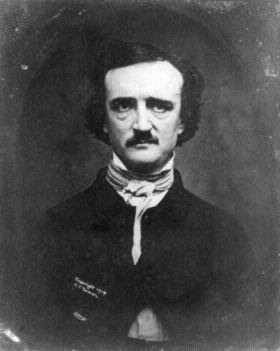
The Tell-tale Heart
By Edgar Allan Poe
True!—nervous—very, very dreadfully nervous I had been and am; but why will you say that I am mad? The disease had sharpened my senses—not destroyed—not dulled them.
Above all was the sense of hearing acute. I heard all things in the heaven and in the earth. I heard many things in hell. How, then, am I mad? Hearken! and observe how healthily—how calmly I can tell you the whole story.
It is impossible to say how first the idea entered my brain; but once conceived, it haunted me day and night. Object there was none. Passion there was none. I loved the old man. He had never wronged me. He had never given me insult. For his gold I had no desire. I think it was his eye! yes, it was this! He had the eye of a vulture—a pale blue eye, with a film over it.
Whenever it fell upon me, my blood ran cold; and so by degrees—very gradually—I made up my mind to take the life of the old man, and thus rid myself of the eye forever.
Now this is the point. You fancy me mad. Madmen know nothing. But you should have seen me. You should have seen how wisely I proceeded—with what caution—with what foresight—with what dissimulation I went to work! I was never kinder to the old man than during the whole week before I killed him. And every night, about midnight, I turned the latch of his door and opened it—oh so gently! And then, when I had made an opening sufficient for my head, I put in a dark lantern, all closed, closed, so that no light shone out, and then I thrust in my head. Oh, you would have laughed to see how cunningly I thrust it in! I moved it slowly—very, very slowly, so that I might not disturb the old man's sleep. It took me an hour to place my whole head within the opening so far that I could see him as he lay upon his bed. Ha!—would a madman have been so wise as this? And then, when my head was well in the room, I undid the lantern cautiously—oh, so cautiously—cautiously (for the hinges creaked)—I undid it just so much that a single thin ray fell upon the vulture eye. And this I did for seven long nights—every night just at midnight—but I found the eye always closed; and so it was impossible to do the work; for it was not the old man who vexed me, but his Evil Eye. And every morning, when the day broke, I went boldly into the chamber, and spoke courageously to him, calling him by name in a hearty tone, and inquiring how he has passed the night. So you see he would have been a very profound old man, indeed, to suspect that every night, just at twelve, I looked in upon him while he slept.
Upon the eighth night I was more than usually cautious in opening the door. A watch's minute hand moves more quickly than did mine. Never before that night had I felt the extent of my own powers—of my sagacity. I could scarcely contain my feelings of triumph. To think that there I was, opening the door, little by little, and he not even to dream of my secret deeds or thoughts. I fairly chuckled at the idea; and perhaps he heard me; for he moved on the bed suddenly, as if startled. Now you may think that I drew back—but no. His room was as black as pitch with the thick darkness, (for the shutters were close fastened, through fear of robbers,) and so I knew that he could not see the opening of the door, and I kept pushing it on steadily, steadily.
I had my head in, and was about to open the lantern, when my thumb slipped upon the tin fastening, and the old man sprang up in bed, crying out—"Who's there?"
I kept quite still and said nothing. For a whole hour I did not move a muscle, and in the meantime I did not hear him lie down. He was still sitting up in the bed listening;—just as I have done, night after night, hearkening to the death watches in the wall.
Presently I heard a slight groan, and I knew it was the groan of mortal terror. It was not a groan of pain or of grief—oh, no!—it was the low stifled sound that arises from the bottom of the soul when overcharged with awe. I knew the sound well. Many a night, just at midnight, when all the world slept, it has welled up from my own bosom, deepening, with its dreadful echo, the terrors that distracted me. I say I knew it well. I knew what the old man felt, and pitied him, although I chuckled at heart. I knew that he had been lying awake ever since the first slight noise, when he had turned in the bed. His fears had been ever since growing upon him. He had been trying to fancy them causeless, but could not. He had been saying to himself—"It is nothing but the wind in the chimney—it is only a mouse crossing the floor," or "It is merely a cricket which has made a single chirp." Yes, he had been trying to comfort himself with these suppositions: but he had found all in vain. All in vain; because Death, in approaching him had stalked with his black shadow before him, and enveloped the victim. And it was the mournful influence of the unperceived shadow that caused him to feel—although he neither saw nor heard—to feel the presence of my head within the room.
When I had waited a long time, very patiently, without hearing him lie down, I resolved to open a little—a very, very little crevice in the lantern. So I opened it—you cannot imagine how stealthily, stealthily—until, at length a single dim ray, like the thread of the spider, shot from out the crevice and fell full upon the vulture eye.
It was open—wide, wide open—and I grew furious as I gazed upon it. I saw it with perfect distinctness—all a dull blue, with a hideous veil over it that chilled the very marrow in my bones; but I could see nothing else of the old man's face or person: for I had directed the ray as if by instinct, precisely upon the damned spot.
And have I not told you that what you mistake for madness is but over acuteness of the senses?—now, I say, there came to my ears a low, dull, quick sound, such as a watch makes when enveloped in cotton. I knew that sound well, too. It was the beating of the old man's heart. It increased my fury, as the beating of a drum stimulates the soldier into courage.
But even yet I refrained and kept still. I scarcely breathed. I held the lantern motionless. I tried how steadily I could maintain the ray upon the eye. Meantime the hellish tattoo of the heart increased. It grew quicker and quicker, and louder and louder every instant. The old man's terror must have been extreme! It grew louder, I say, louder every moment!—do you mark me well? I have told you that I am nervous: so I am. And now at the dead hour of the night, amid the dreadful silence of that old house, so strange a noise as this excited me to uncontrollable terror. Yet, for some minutes longer I refrained and stood still. But the beating grew louder, louder! I thought the heart must burst. And now a new anxiety seized me—the sound would be heard by a neighbor! The old man's hour had come! With a loud yell, I threw open the lantern and leaped into the room. He shrieked once—once only. In an instant I dragged him to the floor, and pulled the heavy bed over him. I then smiled gaily, to find the deed so far done. But, for many minutes, the heart beat on with a muffled sound.
This, however, did not vex me; it would not be heard through the wall. At length it ceased.
The old man was dead. I removed the bed and examined the corpse. Yes, he was stone, stone dead. I placed my hand upon the heart and held it there many minutes.
There was no pulsation. He was stone dead. His eye would trouble me no more.
If still you think me mad, you will think so no longer when I describe the wise precautions I took for the concealment of the body. The night waned, and I worked hastily, but in silence. First of all I dismembered the corpse. I cut off the head and the arms and the legs.
I then took up three planks from the flooring of the chamber, and deposited all between the scantlings. I then replaced the boards so cleverly, so cunningly, that no human eye—not even his—could have detected any thing wrong. There was nothing to wash out—no stain of any kind—no blood-spot whatever. I had been too wary for that. A tub had caught all—ha! ha!
When I had made an end of these labors, it was four o'clock—still dark as midnight. As the bell sounded the hour, there came a knocking at the street door. I went down to open it with a light heart,—for what had I now to fear? There entered three men, who introduced themselves, with perfect suavity, as officers of the police. A shriek had been heard by a neighbor during the night; suspicion of foul play had been aroused; information had been lodged at the police office, and they (the officers) had been deputed to search the premises.
I smiled,—for what had I to fear? I bade the gentlemen welcome. The shriek, I said, was my own in a dream. The old man, I mentioned, was absent in the country. I took my visitors all over the house. I bade them search—search well. I led them, at length, to his chamber. I showed them his treasures, secure, undisturbed. In the enthusiasm of my confidence, I brought chairs into the room, and desired them here to rest from their fatigues, while I myself, in the wild audacity of my perfect triumph, placed my own seat upon the very spot beneath which reposed the corpse of the victim.
The officers were satisfied. My manner had convinced them. I was singularly at ease. They sat, and while I answered cheerily, they chatted of familiar things. But, ere long, I felt myself getting pale and wished them gone. My head ached, and I fancied a ringing in my ears: but still they sat and still chatted. The ringing became more distinct:—it continued and became more distinct: I talked more freely to get rid of the feeling: but it continued and gained definiteness—until, at length, I found that the noise was not within my ears.
No doubt I now grew very pale;—but I talked more fluently, and with a heightened voice.
Yet the sound increased—and what could I do? It was a low, dull, quick sound—much such a sound as a watch makes when enveloped in cotton. I gasped for breath—and yet the officers heard it not. I talked more quickly—more vehemently; but the noise steadily increased. I arose and argued about trifles, in a high key and with violent gesticulations; but the noise steadily increased. Why would they not be gone? I paced the floor to and fro with heavy strides, as if excited to fury by the observations of the men—but the noise steadily increased. Oh God! what could I do? I foamed—I raved—I swore! I swung the chair upon which I had been sitting, and grated it upon the boards, but the noise arose over all and continually increased. It grew louder—louder—louder! And still the men chatted pleasantly, and smiled.
Was it possible they heard not? Almighty God!—no, no! They heard!—they suspected!—they knew!—they were making a mockery of my horror!—this I thought, and this I think. But anything was better than this agony! Anything was more tolerable than this derision! I could bear those hypocritical smiles no longer! I felt that I must scream or die!—and now—again!—hark! louder! louder! louder! louder!—
"Villains!" I shrieked, "dissemble no more! I admit the deed!—tear up the planks!—here, here!—it is the beating of his hideous heart!"


 Posts
Posts


