Copyright 2011 by Gary L. Pullman
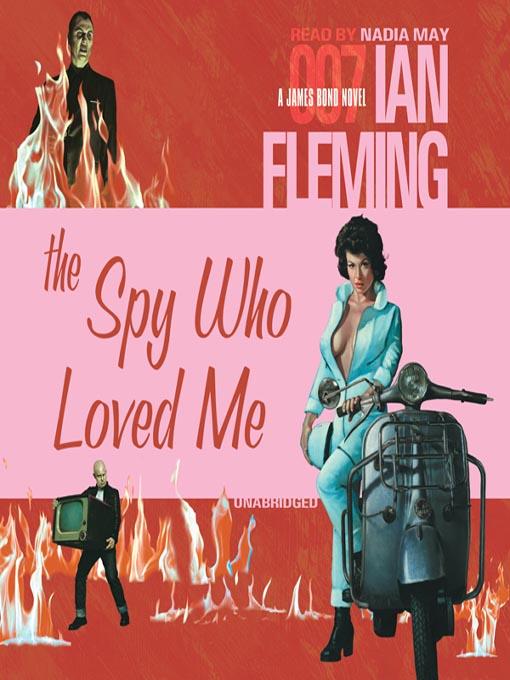
Regardless of the genre in which one writes, an author can learn from his or her peers--regardless of the genres in which they write. In this and the next post, I will consider a couple of the many tricks, for example, that Ian Fleming, the author of the James Bond series of novels, can teach writers of horror fiction--or, for that matter, writers of any other type of narrative literature.
The Spy Who Loved Me (1962) is different from the other novels featuring 007. For one thing, it doesn’t tell his story. As the novel’s title suggests, The Spy Who Loved Me is a woman’s story, for “the spy” is none other than James Bond. The “me” whom he loves is the story’s protagonist, Vivienne Michel, a woman who, down on her luck in love, finances, and otherwise, takes the job of managing an isolated motel. The motel is not doing well, and its owner is heavily in debt. He hires two gangsters, Sluggsy and Horror, to burn down the place so that he can collect the insurance he's taken out on the establishment. Vivienne fears she will be ravished and killed by the men. As the arsonists close in on her, she hears “the sharp sound of the buzzer at the front door,” and “everyone” freezes (95).
In "The Grand Entrance," I discuss the importance of having one’s main character make a grand entrance of some sort--that is, a memorable debut that makes an indelible impression on the reader, calling attention to the protagonist and setting him or her apart from other characters. Although The Spy Who Loved Me is Vivienne’s story, James Bond is the hero of the series of books in which he appears and he is, of course, normally the protagonist of these novels. Therefore, one can expect Fleming to pull out all the stops when he introduces him (especially when Bond doesn’t put in an appearance until page 100 of a 164-page novel, as is the case in The Spy Who Loved Me). The author doesn’t disappoint his reader; this is the way that Fleming introduces the spy:
At first glance I inwardly groaned--God, it’s another of them! He stood there so quiet and controlled and somehow with the same quality of deadliness as the others. And he wore that uniform that the films make one associate with gangsters--a dark-blue, belted raincoat and a soft black hat pulled rather far down. He was good-looking in a dark, rather cruel way and a scar showed whitely down his left cheek. I quickly put my hand up to hide my nakedness. Then he smiled and suddenly I thought I might be all right.Here is a tall, dark, handsome man with an air of “deadliness” to him that matches that of the two gangsters who, having come to burn down the motel that Vivienne manages, decide to ravish and kill her, too. Will this unlikely hero, with the “cruel” face and the “scar. . . down his left cheek” rescue the damsel in distress? If so, how? If not, why not? Won over by Vivienne’s unfortunate past and the traumas it has inflicted upon her emotionally, by her beauty, by her determination and endearing personality, and by her desperate present situation, readers hope, with her, that this dangerous-looking stranger, despite his gangster-like appearance, might somehow save the day--and the damsel in distress. As readers, we are hooked, and Commander James Bond, Agent 007, is an engaging character who is expertly and effectively introduced.
No comments:
Post a Comment