Friday, August 12, 2022

Generating Plot Twists

 Copyright 2022 by Gary L. Pullman


Plot twists, whether they occur at the beginning, the middle, or the end of a story and whether the narrative is a short story or a novel, are popular with readers. The reasons are not difficult to discern. For one thing, as research shows, everyone likes a surprise. (Check out my article on these and other findings, “10 Unusual, Little-known Facts About the Human Brain.”) For another, such twists in the storyline enrich the tale, spinning it off into new directions and, therefore, creating new possibilities.

The problem that newbie writers often face when they want to incorporate plot twists into their works in progress, is how to create them. Doing so may seem nearly impossible.

Hopefully, the pointers I introduce here will help.


To ensure that they write a full story, reporters are taught to answer six questions: Who? What? When? Where? How? And Why? In terms of fiction, these questions relate to character (who?), events or circumstances (what?), setting (when” and where?), action (how?) and cause or motive (why?) In addition to ensuring that all the elements of a plot are included in a narrative, these questions can also generate plot twists. Here are a few examples.

WHO?

Appearance: Jenny is Louis's daughter.

Twist: Jenny is Louis's wife.


Appearance: Jay is trying to kill Dawn.

Twist: Jay is protecting Dawn from a stalker who seeks to kill her.


Appearance: Jake is hired as Jasmine's bodyguard.

Twist: Jake is posing as Jasmine's bodyguard to hide the fact that he and she are having an affair.


WHAT?


Appearance: Beth's familiarization with her new house suggests that she has been there before, although she has no memory of the place.

Twist: Beth has been hypnotized so that certain sensory perceptions trigger false impressions that make the house seem familiar to her.


Appearance: John tells police that Tim pushed him down a well; a lie-detector test affirms that he is telling the truth.

Twist: John fell down the well, despite Tim's effort to prevent his fall but honestly remembers the incident incorrectly.


Appearance: Joe expects Tina to accept his marriage proposal.

Twist: Tina makes her acceptance provided that Joe will agree to an open marriage.


WHEN? and WHERE?


Appearance: Shirl is excited to be flying to an island resort with Matt.

Twist: The “resort” is actually a prison that Matt constructed for Shirl on an island he bought a year ago.


Appearance: Lynda, a world traveler, enjoys a trip to Las Vegas.

Twist: Lynda is hospitalized in a coma; her imagination is programmed with images loaded into her brain through a computer link.


Appearance: Drake leaves his house to go to work.

Twist: Outside, the Martian landscape is a bitter reminder to him that he is not on Earth, despite the suburban house in which he lives.


HOW?


Appearance: Stella, a corrupt lobbyist, bribes Senator White to vote her way on an upcoming bill.

Twist: Senator White votes the way that Stanley, a rival lobbyist, wants him to vote because Stanley paid the senator more money than Stella did.


Appearance: According to news media, government scientists have discovered a new species of lizard.

Twist: The new species is actually not a lizard but an intelligent, lizard-like creature of extraterrestrial origin that has been purposely misidentified by the government.


Appearance: Instead of taking Donna, his fare, to her destination, Luke, a “mobility service” driver, transports her to a local police precinct, where she is met by police officers.

Twist: Face-recognition software aboard the mobility service vehicle identified Donna as an escaped prisoner and discretely signaled to Luke to drive her to the precinct.


WHY?


Appearance: Wanting to have more children, Karen undergoes fertility treatments.

Twist: When she has four quintuplets, Karen is delighted; now, she will have five children, rather than one, to sell.


Appearance: JoJo, a sidewalk magician, entertains pedestrians and passersby, free of charge.

Twist: As JoJo performs tricks, his accomplice Nancy picks pockets the several of the spectators.


Appearance: Martha photographs headstones in a cemetery to post to an Internet website that maintains a database of cemetery records provided by volunteers.

Twist: Martha delivers her photographs to Thad, the warden of a voting precinct, who expresses his confidence that his candidate will win the election now underway.


Another way to generate plot twists is to provide a twist on actual news items. A good source for this approach is the News tab associated with your favorite Internet browser. (I use Firefox.) In the browser's home page's search field, type “news.” Then, click the “News” tab at the top of the page, or screen, that next appears. A list of stories' titles, each with a brief synopsis, will appear. Identify the item of interest to you and copy the synopsis shown under the item's title. Paste it into your word processing document. This is the apparent development that the reader expects as a result of having read your story (once you've written and published, released, or posted it).


Appearance: “A 49-year-old man is dead following a fight at General Motors' Orion Assembly a plant, the Oakland County Sheriff's Office confirmed.” (Source: USA Today by way of yahoo.com). (There's no need to include the source in your own plotting; I am citing it because I am writing an article, but if you do include the source of the information that you are using as a basis for developing a twist, doing so could help you to access the original story again, should you wish to do so.) I have stripped the synopsis of specifics, represented by the crossed-out words and phrases, since I need only the general situation for my own development of a story and it is best not to use specifics that you do not invent yourself, since many individuals and organizations may object to such treatment, even in fiction.

Twist: The company's annual championship martial arts event is expected to continue, as the company considers the event a good way to promote morale, when matches are “properly conducted” (i. e., the fights are “fixed”), while simultaneously eliminating “unmotivated and unsuccessful” workers among its workforce.


Appearance: “Ricky Shiffer, the [An] armed suspect in the Cincinnati [a local] FBI field office attempted break-in, was described as a "suspected domestic violent extremist," officials said. ” (Source: ABC News)

Twist: The FBI director compliments his Obfuscation Linguistics Team (OLT) for the clever invention of the new designation, "suspected domestic violent extremist," that was applied to this suspect, praising the designation as “especially effective in generating outrage and fear among the general population, even as it prejudices the suspect's alleged actions, labeling him as a dangerous threat to society before the formality of a 'fair trial.'”


A third way of generating plot twists is to identify those which have already been used by other writers and adapting them to the demands of your own story's development and needs. It is best, again to reduce specifics to generalizations; what you're after is not exactly how another writer developed a twist, but how it can be used as a general technique for generating a number of specific, but different, twists and twists for a variety of your own story, whatever your narrative's genre. Let's try a few using the Buff the Vampire Slayer television starring Sarah Michelle Gellar, which I am binge-watching now for the umpteenth time. (It's a great series for learning the writing craft.) (Maybe I will write another article, later, on “What I've Learned from Buffy the Vampire Slayer.”)


Here's a list of some of the series' Appearances and their Twists.


Appearance: Amy Madison, a witch, uses dark magic to secure a place on Sunnydale High School's cheerleading squad.

Twist: Amy is actually her mother Catherine, who has used witchcraft to swap bodies with her daughter in order to relive the glory days of her own teenage years as a Sunnydale High School cheerleader.


Appearance: After Sunnydale High School biology teacher Dr. Gregory is murdered, he is replaced by Ms. French, a substitute teacher.

Twist: Ms. French is not a woman, but a giant praying mantis, able to take a woman's form. She killed Dr. Gregory so that she could mate with one of his biology students.


Appearance: The Order of Taraka, a group of hired assassins that includes a young woman named Kendra, seek to kill Buffy.

Twist: Kendra has seen Buffy kiss Angel, a vampire, so she mistakes Buffy for a vampire; Buffy believes that Kendra, who attacks her, is one of the assassins, when, in fact, it turns out that Kendra is also a vampire slayer.


Appearance: Buffy's mom, Joyce, dates Ted, a computer software salesman she met through an online dating website.

Twist: Ted is not a man; he's a robot that a dying man, also named Ted, had built to care for his soon-to-be widow.


Again, simply generalize these twists so that they can serve your own story, whatever its genre. For example, the first, involving the cheerleader-witch scenario, could be restated:


Appearance: To win a position against a rival, an individual cheats on a qualification test.

Twist: The cheater is actually cheating on behalf of another person who wants to acquire the position.


A second example:


Appearance: After the death of an expert, a substitute replaces him or her.

Twist: The replacement has an ulterior motive for accepting the substitute position.


REVIEWERS WANTED! Claim your FREE review copy of my urban fantasy novel A Whole World of Hurt at this link: https://booksprout.co/reviewer/review-copy/view/90470/a-whole-world-full-of-hurt Thank you! 


Wednesday, May 11, 2022

Hop-Frog: A Story of Reversals

copyright 2008 by Gary L. Pullman
 

As a rule of thumb, a writer introduces his or her story’s protagonist before the antagonist makes an appearance. One reason for doing so is that people respond most strongly to the person they meet first, especially if the individual seems to be a decent sort of a soul, as protagonists, even self-conflicted ones, usually are, just as readers tend to most remember whatever they read first. After all, since the narrative is the story of the main character, it makes sense to introduce the protagonist first, before any other character takes the stage (or the page). Another reason for introducing the main character first is to establish clarity. Introducing the protagonist first makes it clear to the reader, from the outset, whose story is being read or told. 

Occasionally, however, this rule is violated, as is the case in “Hop-Frog,” Edgar Allan Poe’s short story of humiliation and revenge. Poe starts his tale by introducing its antagonist, or villain, a nameless, sadistic king who delights in abusing his fool, Hop-Frog.

An example of the monarch’s cruelty is the jester’s nickname. In an apparent attempt to curry favor with their liege, the king's “seven ministers,” aware of the ruler's delight in unkindness, named the jester “Hop-Frog” to make fun of his peculiar style of locomotion: “In fact, Hop-Frog could only get along by a sort of interjectional gait--something between a leap and a wriggle--a movement that afforded illimitable amusement, and of course consolation, to the king.”

Such a problem would elicit pity and sympathy from a nobler person, but the king is obviously well pleased with the wittiness of his ministers’ naming the fool’s for the effect of his unfortunate disability. The king also enjoys tormenting Hop-Frog directly. The dwarf and a fellow citizen, Tripetta, also a dwarf, were abducted from their homeland and given, as if they were but things, rather than people, “as presents to the king, by one of his ever-victorious generals.”

Aware that Hop-Frog misses the friends whom he was forced to leave behind and aware, furthermore, that the fool is unable to drink wine without suffering from near madness as a result, the king directs his jester to drink to in the honor of his “absent friends.”

When the wine and the thought of his “absent friends” has the effect upon Hop-Frog that the king has anticipated, the king thinks the jester’s grief and miserable state of intoxication amusing: “It happened to be the poor dwarf's birthday, and the command to drink to his 'absent friends' forced the tears to his eyes. Many large, bitter drops fell into the goblet as he took it, humbly, from the hand of the tyrant.”

The king responds with cruel laughter: "'Ah! ha! ha! ha!' roared the latter, as the dwarf reluctantly drained the beaker. 'See what a glass of good wine can do! Why, your eyes are shining already!'"

The king’s malice is also seen in his abusive treatment of Tripetta. When she intercedes with the king on the behalf of Hop-Frog, upon whom the monarch seeks to force still more wine, the king “pushed her violently from him, and threw the contents of the brimming goblet in her face.”

The vulgarity of the king and his sycophantic courtiers, vis-à-vis the grace Hop-Frog and Tripetta, is a second reversal in the story. Not only has Poe introduced the villainous king before he’s introduced the heroic fool, but he has also traded the stereotypical natures of these two characters, making the noble king vulgar and the low fool courteous.

These reversals effect much of the story’s irony. Customarily, a reader would suppose the king, rather than a jester, to be the refined and cultured sophisticate. In fact, the comedy of the fool is often ribald and crude, involving the same sort of humiliating practical jokes, at times, as those that the king performs.

The king’s humiliation of Tripetta is the story’s inciting moment, for it is this act of outrage upon her that inspires Hop-Frog’s plan for revenge, as, ironically, he tells the intended victim: “just after your majesty had struck the girl and thrown the wine in her face--just after your majesty had done this...there came into my mind a capital diversion .” Thus, the king, in a sense, is undone by his own sadistic nature, for it is one of his acts of mindless cruelty that inspires Hop-Frog’s scheme to kill him in a fashion that is at once both spectacular and horrible.

Traditionally, regardless of the king’s character or the morality of his deeds, if he orders the execution of one of his subjects, for any (or no) reason, the subject would be killed, no questions asked. In “Hop-Frog,” however, it is the fool who, in another reversal, becomes the executioner of both the king himself and his toadying courtiers. What’s more, Hop-Frog accomplishes his vengeance of Tripetta’s honor with impunity, thereby further humiliating the monarch and his noble friends, since he escapes punishment for having, in essence, assassinated his own and Tripetta’s tormentors. Each of these reversals heightens the story’s irony.

Hop-Frog’s revenge is extremely violent and horrible. Had Poe not prepared the reader to accept this act as just, albeit appalling, the reader’s sympathy for the crippled dwarf and his beloved Tripetta would likely not withstand the gruesome deaths that he causes the king and his courtiers to suffer. Instead, the immolation of the nobles would have been regarded, in all likelihood, as being too extreme and it would suggest that it is Hop-Frog who is the true monster, rather than his adversary, the king’s own cruelty notwithstanding.

The reader accepts the justice of Hop-Frog’s execution of his tormentors for several reasons. First, the odds are against Hop-Frog. He is a mere court jester. His adversary is a monarch who enjoys absolute power. Readers support an underdog. 

Second, the king is cruel. He is, in other words, a sadist. Many times, he has abused Hop-Frog simply for his own amusement and, perhaps, to show off in front of his courtiers. He is not above insulting even someone as beautiful, kind, and harmless as Tripetta, although he must know that doing so will both hurt her and offend Hop-Frog. He has no regard for their feelings.

Third, Hop-Frog outsmarts the powerful king, and readers favor one who, through the use of nothing more than his or her wits, can outsmart another, especially if the other occupies a position of far greater social status, authority, and power. If one such ordinary person can accomplish such a feat, perhaps others--the reader included--can do likewise. Certainly, many will have harbored fantasies of doing just such a thing.

Fourth, Hop-Frog, like Tripetta, is a dwarf. He is literally smaller than the king, and, figuratively, he is a common person, one of the little guys, so to speak. Hop-Frog is physically weaker, too, than his larger tormentors. Nevertheless, he uses his brain to overcome their brawn, a feat that always gains admiration and respect among those in similar circumstances.

Fifth, Hop-Frog is crippled. His severe handicap, the object of the king’s scorn and ridicule, make him ill-matched to take on the king. Nevertheless, the intrepid dwarf does so--and wins.

Sixth, Hop-Frog is shown to be a sensitive and caring person. He loves Tripetta, and, when she is insulted, he is also hurt, and he vows revenge, even at the risk of his life.

Perhaps the reader would not overlook Hop-Frog’s murder of the king and his courtiers in a such a horrible manner if only one of these conditions or characteristics mitigated against the horror of the deed, but there are at least six extenuating facts, as enumerated herein. Together, they seem to be warrant enough for the reader to ignore the stupendous horror of the dwarf’s immolation of his live victims.

Other horror stories often include a reversal, usually in the form of the surprise, O. Henry-type ending. A good example is “The Monkey’s Paw” by W. W. Jacobs and “The Red Room” by H. G. Wells, both of which have been posted in Chillers and Thrillers. In these stories, the plot suggests a certain type of ending as likely, or even as seemingly inevitable, but then surprises the reader with the substitution of a different ending but one that is, nevertheless, logical and satisfying.

For example, in Wells’ story (which, incidentally, is a clear precursor to Stephen King’s story, “1048”), a skeptic stays overnight in an allegedly haunted room. Despite his doubt as to the reality of the supernatural, he experiences increasingly frightening incidents until, bursting from the room, he strikes the door frame. He turns, confused, and reels into various furniture until he knocks himself unconscious.

The reader is led to assume that the room truly is haunted and, then, Wells offers what, in effect, is a punchline of sorts: the room is haunted by the fear of those who, believing the chamber to be haunted, occupy the place: “Fear that will not have light nor sound, that will not bear with reason, that deafens and darkens and overwhelms.”

The Others, a horror film, also has such a twist: the residents of a haunted house turn out to be the ghosts, just as the apparent ghosts turn out to be the house’s human inhabitants. Such reversals are still marginally effective, if rather overdone, but stories such as “Hop-Frog” are rare in their sophisticated employment of plot reversals, and such stories are correspondingly enriched.

Friday, March 11, 2022

The Problem-Solution Plot

 Copyright 2022 by Gary L. Pullman

In some horror movies, the plot is structured by attempting to solve a problem to no avail. Such plots have three parts: the problem, which is the film's inciting moment; the solution, its turning point; and the failure of the attempted solution, the denouement.

These are examples of films that have this three-part structure.


The Hunger (1983)

Problem: Beautiful vampire Miriam's husband John begins to age rapidly.

Solution: Miriam seeks a new lover.

What Goes Wrong: Miriam ages rapidly after a lover locks her inside a coffin.

Jennifer's Body (2009)

Problem: A ritual transforms Jennifer into a succubus who must devour men to survive.

Solution: Jennifer goes on a killing spree.

What Goes Wrong: During a fight Jennifer bites Needy, who then kills Jennifer but, assuming some of Jennifer's traits, Needy becomes a killer.


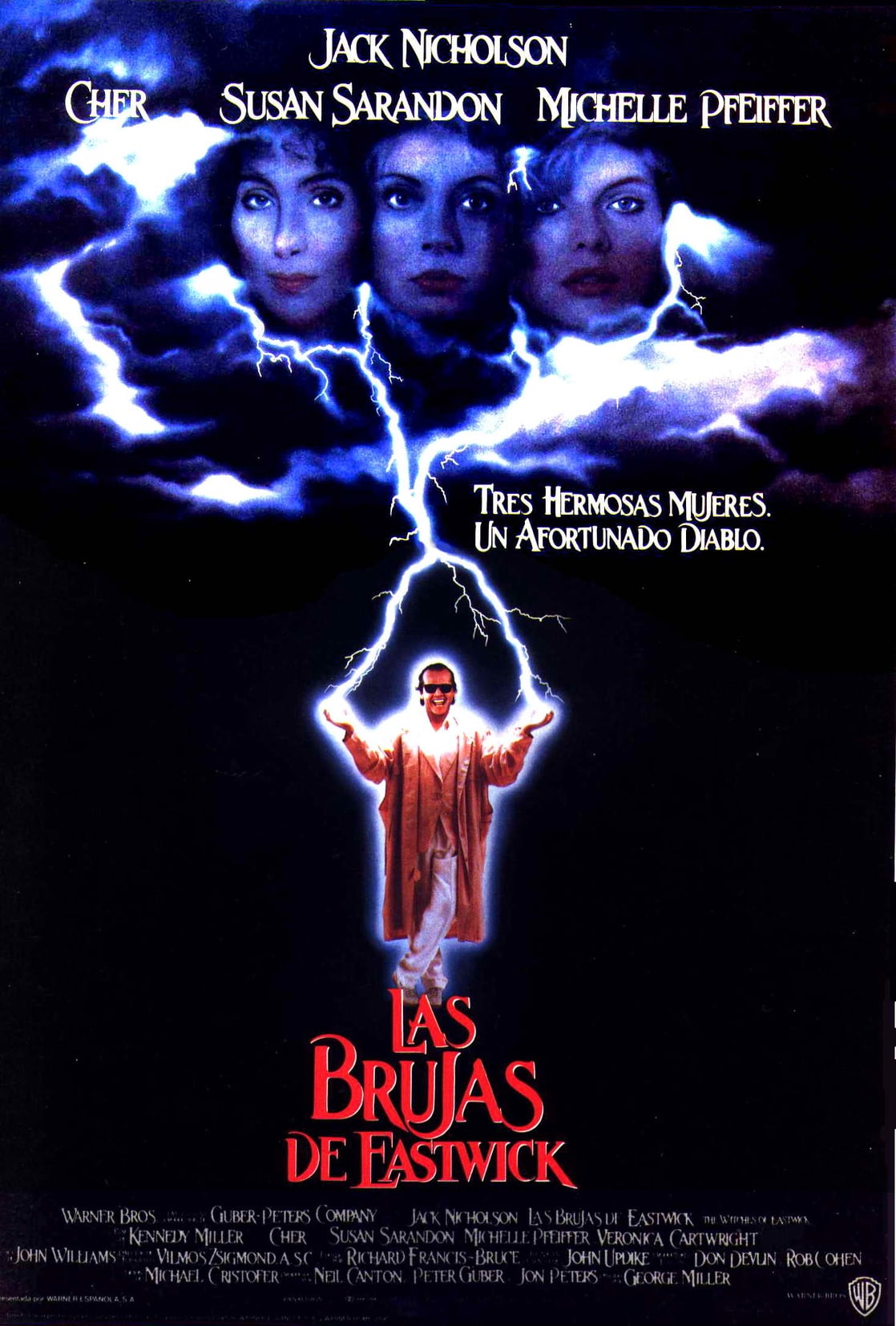
The Witches of Eastwick (1987)

Problem: Witches seek the perfect man.

Solution: They find the devil, who poses as their dream come true.

What Goes Wrong: The witches attempt to control the devil through various magic spells.

Piranha 3D (2010):

Problem: Flesh-eating, prehistoric fish swarm Lake Victoria during spring break.

Solution: The fish feed on tourists.

What Goes Wrong: The piranha are killed, but they are only babies; the mature piranhas live, continuing the attacks.


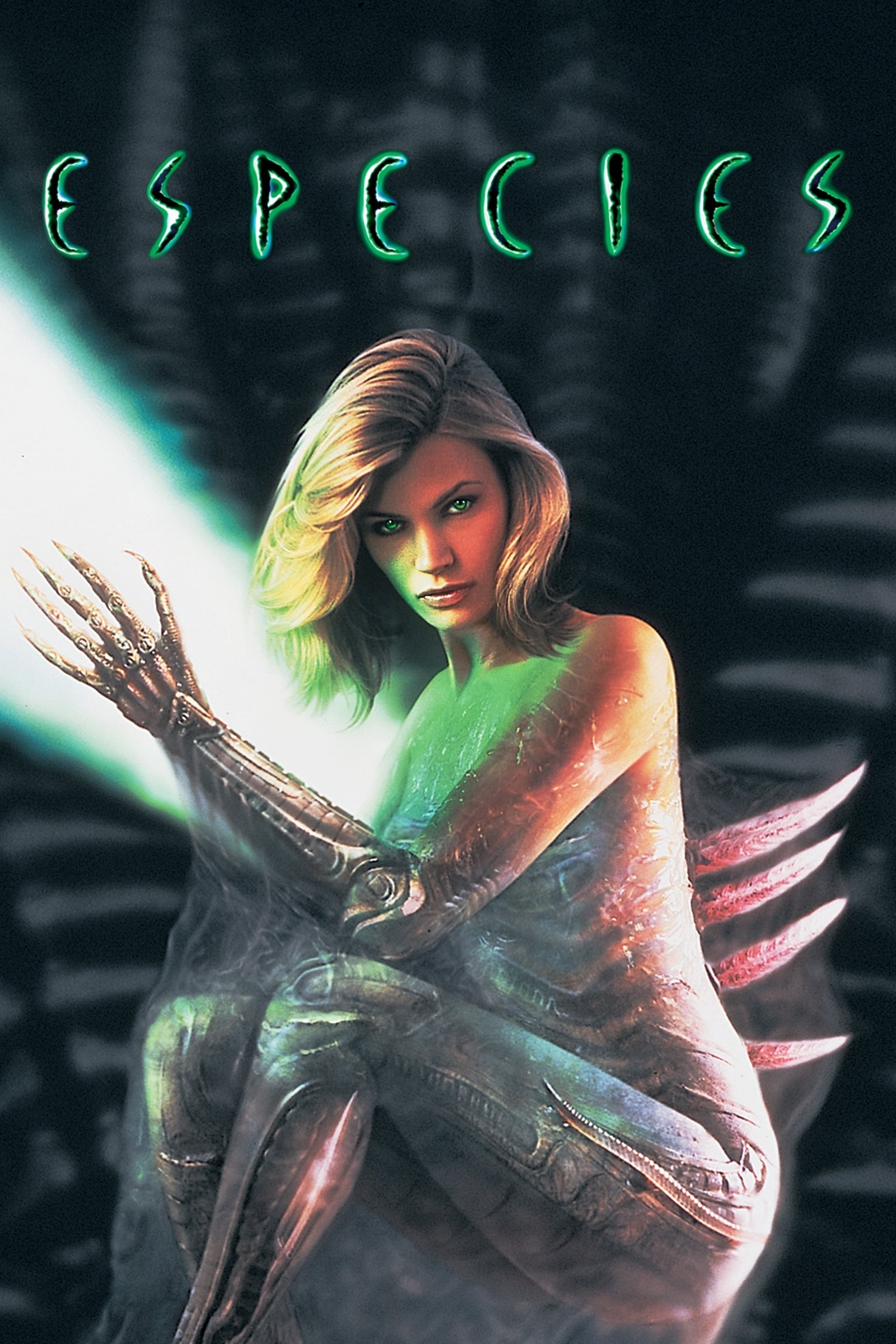
Species (1995)

Problem: A female alien, Sil, needs to breed.

Solution: Sil kills men unsuitable mates.

What Goes Wrong: Although blasted with a shotgun, Sil mutates into a different, equally vicious, organism.


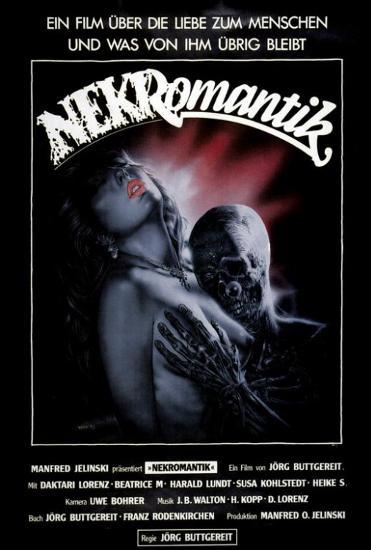
Nekromaniac (1987)

Problem: Rob, a street sweeper who cleans up after grisly accidents brings home a full corpse for him and his wife Betty to enjoy sexually.

Solution: Betty prefers the corpse over Rob.

What Goes Wrong: Rob commits suicide.

Psycho (1960)

Problem: Norman Bates's mother won't allow him to date.

Solution: Norman kills a woman to whom he is attracted.

What Goes Wrong: Norman, who dresses as his late “mother,” is arrested and jailed.


Monday, January 10, 2022

The Writer's Toolbox, Part I

 Copyright 2022 by Gary L. Pullman

 A writer's toolbox contains instruments that are used to perform specific tasks related to a particular process. These same tools serve both the writer of fiction and nonfiction:


  • Analysis: the separation of an idea or an argument into its constituent parts for the understanding the function of each part individually and their interrelationships with one another; see process analysis

  • Argumentation: the use of inductive and deductive reasoning to advance and support a premise with convincing argument or to refute the premise of an opposing point of view

  • Classification: the grouping of persons, places, things, or ideas or evidence into categories according to common characteristics

  • Comparison: the process of identifying similarities between two or more persons, places, things, or ideas that are alike in a significant way

  • Contrast: the process of identifying differences between two or more persons, places, things, or ideas that are unalike in a significant way

  • Definition: identifying the meaning of a word based on its genus (classification among similar terms) and its differentiae (differences from those with which it is classified)

  • Description: the presentation of the characteristics of persons, places, things, or ideas

  • Division: the separation of persons, places, things, or ideas on the bases of differences between or among them

  • Exemplification: the process of providing examples to illustrate a thesis or topic sentence.

  • Process analysis: the process of identifying and explaining the steps, in sequence, result in a particular outcome


Some of these tools, such as classification and division and comparison and contrast, are opposites but are often used together.

These tools, or patterns of development, may be used on the page (onstage, as it were), while writing a story or a script, or off the page (offstage), during the planning of a story or a script, for example.

In our next post, we will consider how several notable authors of horror fiction use these instruments in the writing of their fiction.