Tuesday, January 28, 2020

Women Writers: Greater than the Sum of Their Parts

Copyright 2020 by Gary L. Pullman

In Monster, She Wrote: The Women Who Pioneer Horror & Speculative Fiction, Lisa Kroger and Melanie R. Anderson contend that women writers' horror fiction was (and is) often of a "transgressive" nature, a reaction against women's "marginalization," as a form of "noncompliance" with the rules that a patriarchal society imposes upon women (9-10).
  
While it may be fallacious and simplistic to paint the lady writers of early horror fiction with so broad a brush, it may be true, in some cases, at least, that the impulse to write this particular type of horror fiction is, at times, at least, inspired by the motivation to rebel, if only in print.
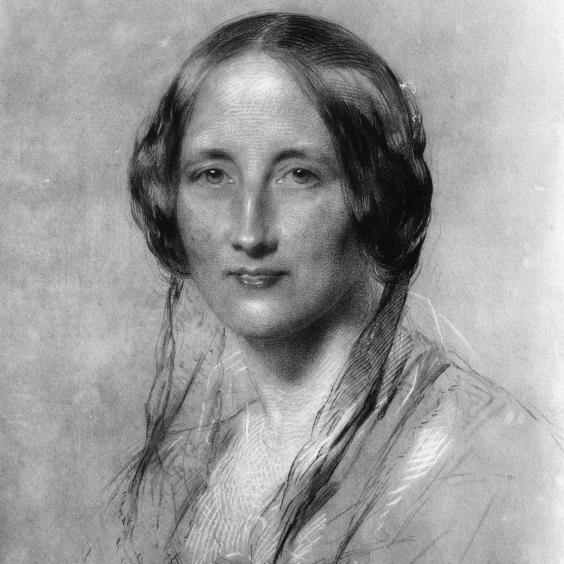
Elizabeth Gaskell
Certainly, women writers were early practitioners of domestic horror, and, as the authors of Murder, She Wrote observe, "women in the nineteenth century were expected to be good homemakers, both as wives and mothers" (53). Stories of ghosts provided a means of catharsis for Elizabeth Gaskell, allowing her to explore and criticize such themes as spousal abuse and patriarchal oppression.
Charlotte Dacre 
Vernon Lee


Sarah Waters


Jewelle Gomez
Kroger and Anderson's own glosses on the backgrounds of the women they feature in their review of women writers of horror fiction actually reveal a variety of inspirations for their writing, including an interest in erotica (Charlotte Dacre), a love of travel (Amelia Edwards), the repudiation of racism (Pauline E. Hopkins), lesbian leanings (Vernon Lee, Sarah Waters, and Jewelle Gomez), psychological instability (Edith Wharton), spiritualism (Margery Lawrence), the desire to live more imaginative lives, even if only in through the lives of the protagonists they themselves created (Everil Worrell), and a "personal struggle with . . . religious faith" (Anne Rice). 
Lisa Kroeger
Melanie R. Anderson
The authors of Monster, She Wrote, in writing about women writers of horror fiction, tend to characterize the authors the way that writers of fiction sometimes characterize the minor figures they create. As a result, Kroger and Anderson tend to reduce the authors to a single personality trait and their motivation to one or, at most, a few, impulses.
What works in genre fiction doesn't work in biography. A person is much more than a personality trait, and it is her whole life that motivates him or her, not just one or a few passionate interests. By reducing women writers to flat, mostly static characters, Kroger and Anderson do their literary "pioneers" (and their readers) a disservice.
However, the authors are ambitious, and their book provides a lot of other information besides the authors' biographical sketches of the women writers whom Kroger and Anderson profile. Though not without its flaws, Monster, She Wrote has enough good material to recommend itself highly to fans of the genre.


Tuesday, January 14, 2020

The Not-So-Gentle Sex

Copyright 2020 by Gary L. Pullman


Horace Walpole


Although Horace Walpole's 1764 novel of mistaken identities, The Castle of Otranto, is the first work of Gothic horror, women writers popularized the new genre.


Ann Radcliffe


Uncanny rather than marvelous, Ann Radcliffe's The Mysteries of Udolpho (1874) focuses on the attempt by her uncle to marry of the orphaned Emily St. Aubert to his friend, Count Morano, in a scheme to divest both his own wife and the count's bride of their property. Radcliffe (1764-1823) influenced several notable male authors, including Edgar Allan Poe (1809-1849).


Mary Shelley 


Not only did Mary Shelley (1797-1851) create a horror icon when she penned Frankenstein, or; The Modern Prometheus in 1818, but she may also have kept a part of the body of her late husband, the poet Percy Bysshe Shelley, as a memento. 


Charlotte Dacre


Charlotte Dacre (pen name of Charlotte Byrne) (c. 1771-1825) shocked the literary world of her day with the publication of her 1806 novel Zofloya; or, the Moor, a feminine version of Matthew Lewis's The Monk. Lewis's novel was regarded as salacious; it included a lusty monk and a cross dresser; Dacre's book, which was full of the adventures of harlots and courtesans, was even more scandalous.

Other volumes, as lascivious as Zofloya, followed, including The Libertine (1807) and The Passions (1811). The former was published under the pseudonym Rosa Matilda, a reference to a women who, seduced by Lewis's monk, became a seductress herself.

https://www.amazon.com/dp/B07M9HGBGV/ref=dp-kindle-redirect?_encoding=UTF8&btkr=1#reader_B07M9HGBGV
 
To read further about these authors of the not-so-gentle sex, check out the fascinating 2019 tome Monster, She Wrote: The Women Who Pioneered Horror and Speculative Fiction by Lisa Kroeger and Melanie R. Anderson.

Thursday, January 9, 2020

Chillers and Thrillers: New Publisher Sponsors Fiction Contest!

Chillers and Thrillers: New Publisher Sponsors Fiction Contest!: Coming in February to Campbell and Rogers Press : tales with a twist by Michael Williams. An eclectic collection of flash fiction, th...

The Tzvetan Todorov Plot

Copyright 2020 by Gary L. Pullman


In The Fantastic: A Structural Approach to a Literary Genre, Dr. Tzvetan Todorov differentiates between fiction that is fantastic, uncanny, or marvelous.

 
A story is fantastic, he says, if it cannot be resolved as either uncanny or marvelous. For example, at the end of Henry James's novel The Turn of the Screw (1898), it remains unclear whether the ghosts are real or simply products of the governess's hallucinations.


A story is uncanny if its seemingly fantastic incidents can be explained rationally or scientifically. According to this understanding, H. G. Wells's short story “The Red Room” (1894) is uncanny: the ghost that allegedly haunts the castle in which the protagonist has come to spend the night turns out to be the invention of his imagination, an effect of his fear.


A story is marvelous if its incidents cannot be rationally or scientifically explained. Stephen King's short story “1408” (1999) is marvelous, because the ghosts (or demons) that allegedly haunt the hotel room in which the writer spends the night are, in fact, truly supernatural.

Whether intentionally or not, Todorov offers a formula for plotting fantastic, uncanny, or marvelous fiction. It sounds complicated, but it's actually fairly simple. This is how it works:
  1. Develop a single situation that can be understood in either natural and or terms or that can be interpreted by reference to the supernatural or faith.
  2. During the course of the story, indicate that the situation may be supernatural.
  3. Show that the situation actually is supernatural or natural in origin of character or that the situation cannot be resolved in either way.
Fiction provides many models of this approach. Here are a few:


Uncanny:“The Damned Thing” (short story) (1893) by Ambrose Bierce; “The Premature Burial” (short story) by Edgar Allan Poe (1844); A Tough Tussle” (short story) by Ambrose Bierce (1888)


 Marvelous: The Exorcist (novel) (1971) by William Peter Blatty; The Sixth Sense (movie) (1999) directed by M. Night Shyamalan; “Dracula's Guest” (short story) (1914) by Bram Stoker


Fantastic: The Exorcism of Emily Rose (movie) (2005) directed by Scott Derrickson;“The Birds” (short story) (1955) by Daphne du Maurier; Let's Scare Jessica to Death (movie) (1971) directed by John Hancock

By analyzing these stories and others that use the Tzvetan Todorov plot, we can see what specific techniques their writers use to create and sustain the ambiguity that results from the tension between the two opposite interpretations of the stories' incidents, that of the natural and that of the supernatural.

Uncanny: In writing “The Red Room,” Wells withholds the actual (natural) cause of the allegedly supernatural incident (the ghost's haunting of the red room) that the protagonist investigates. By doing so, Wells allows the extinguishing of the candles and the fire in the room's fireplace to seem to be the work of the ghost. His panic causes him to run through the chamber in the dark, seeking escape, which results in his knocking himself unconscious when he collides with a piece of furniture. It is only upon awakening that he realizes that the red room was haunted only by his own fear-fueled imagination.


Marvelous: In The Exorcist, Regan MacNeil's strange behavior causes her mother Chris to seek both medical and psychiatric help for Regan after Chris cannot rationally account for Regan's behavior. Both sciences fail to help Regan, who becomes worse. To help Regan, Chris eventually turns to a priest, Father Damien Karras, despite her own atheism. Through exorcism, at the cost of his own life, Father Karras rids Regan of the demon that possesses her. By postponing the revelation that Regan's apparent demonic possession is, in fact, genuine, Blatty creates and sustains ambiguity as to whether the possession is apparent (the result of a physiological or mental disorder) or real.

Withholding the cause of the seemingly fantastic, as Wells does in “The Red Room,” or showing the failure of both reason and science to account for a seemingly supernatural incident before revealing that the incident actually is fantastic, as Blatty does, introduces the possibility of the fantastic while establishing it as subject to natural or rational interpretation or as genuinely marvelous. 

Other techniques that writers using what is here referred to as the Tzvetan Todorov plot include:
  • Swinging back and forth between the natural or scientific explanation of an incident that only at first appears to be marvelous and never explaining the incident's inexplicable mystery (i. e., implying its truly marvelous character).
  • Explaining, eventually, that the apparently fantastic incident is the result of a trick; it is a hoax, a prank, or a publicity stunt.
  • Explaining, eventually, that the apparently fantastic incident is the enactment of a rite or ritual performed by people who genuinely believe that the act is supernatural.
  • Confusing one state of affairs (e. g., a cataleptic trance) with another state of affairs (e. g., death).