Sunday, January 27, 2019

Futuristic Fiction

Copyright 2019 by Gary L. Pullman
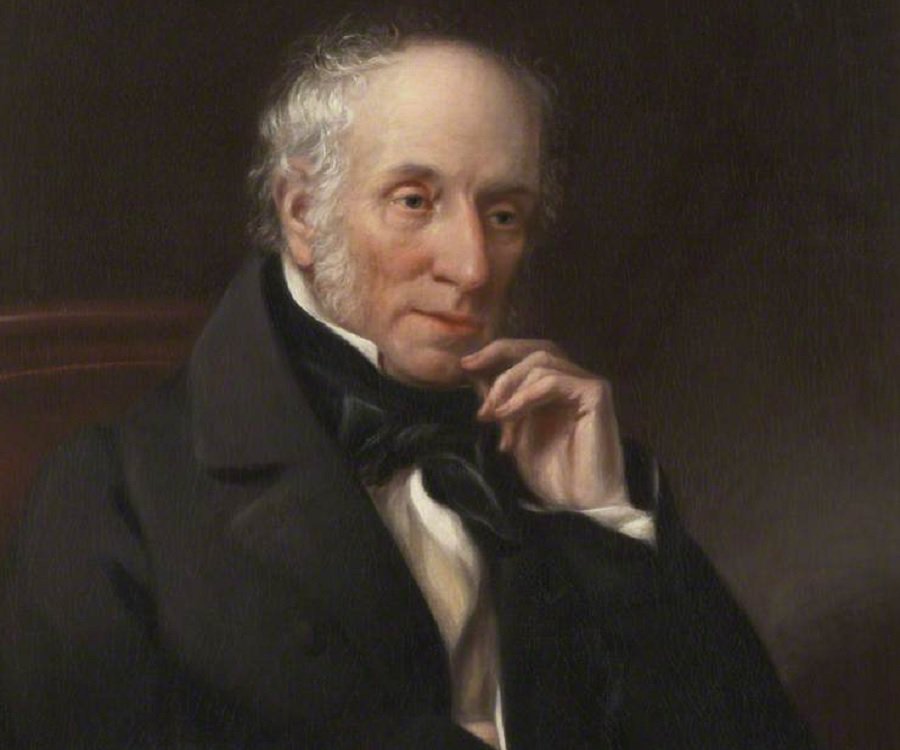

“The world is too much with us,” William Wordsworth warned, and it's true: we do get caught up in the day-to-day affairs of our everyday lives. As a result, we often miss the mystery and beauty of the natural world—and of the inner worlds of ourselves and others.
 

It is to escape the tedium of everydayness that men and women travel, devote themselves to arts or crafts, learn to play musical instruments, attend movies or sports events, concerts or plays, and, of course, read.


Reading takes us out of ourselves; sometimes, it also takes us out of this world, to times past or future, to strange worlds or other dimensions, or even, in the case of Dante's Inferno, to hell itself (not that such a destination is recommended, ordinarily.)


But what happens when the worlds of poetry, fiction, and drama themselves become too familiar to provide the escape from everydayness we crave? When the tropes and themes of genre literature themselves become too commonplace, they cannot alleviate the boredom of what The Mothers of Invention called our “dull, gray” existence.


Futurology, the study (or, perhaps, speculation about) of possible future situations, events, and states of existence based upon extrapolations from current ones, often rekindles the imagination. The future may not be exactly as futurologists envision it, but, even if it is not, their conjectures provide fresh visions of the way things could be, and that's all a writer of popular literature, regardless of genre, needs to rekindle his or her own imagination.

With thriller and horror fiction genres in mind, let's consider some of the possibilities that futurologists' ideas might suggest in the way of such elements of fiction as characters, settings, plots, motives, and conflicts.


There are astonishing technological marvels on the horizon, futurologists predict, including eye-controlled technology, paper diagnostics, designer antibiotics, ingestible robots, smart clothing, photonics in space, volcanic mining, a spintronics revolution, carbon-breathing batteries, super antivirals, diamond batteries, optogenetics, nano feasibility, an unhackable quantum Internet, biometric materials, the next generation of artificial intelligence, 3D printing in every home, designer molecules, a fully immersible, computer interface, and a self-sufficient ecosystem.


Whew! If that list doesn't suggest some fresh characters, settings, plots, motives, and conflicts that can be, as Stephen King defines horror, (a) disgusting, (b) horrific, or (c) terrifying, maybe there's no future for horror (or for the unimaginative aspiring horror writer, at least).

The first step in using the futuristic fiction approach is to research the type of technology in which you're interested as a writer. Start by gaining an overview of the technology. Then, learn whatever more detailed material you need to make your story accurate and believable. (Hint: Videos, such as those available on YouTube, are often quite sound academically and provide a moving, audio-visual rather than a static, learning approach, which some might prefer to reading.)


For example, suppose you're interested in eye-controlled technology. You might make a list of questions to research:
  • How does it work?
  • What uses does it have? (How has it been used? How else might it be used? In other words, what are its applications?)
  • What benefits does it provide?
  • What are its disadvantages?

As other relevant questions present themselves, research them as well.

How does it work?


Eye tracking records our point of gaze and our eye movements in relation to the environment and is typically based on the optical tracking of corneal reflections, known as pupil center corneal reflection (PCCR).


Eye-tracking technology can installed in personal computers, peripheral devices, or eyeglasses.

What uses does it have? (How has it been used? How else might it be used? In other words, what are its applications?)


There’s a chance that soon eye tracking will be a standard feature of a new generation of smartphones, laptops and desktop monitors setting the stage for a huge reĆ«valuation of the way we communicate with devices—or how they communicate with us.

In the past year eye tracking technology moved from being a promising technology to being adopted in commercial products in a wide array of consumer segments simultaneously,” Werner says.

. . . VR headset companies are making large investments in eye tracking technology.

. . . eye tracking might make it a whole lot easier for gamers to interact with the gaming environment.

There is an increasing interest in using eye tracking to help diagnose — and potentially treat –neurological disorders,” says Bryn Farnsworth, science editor at biometric research company iMotions.

With eye tracking technology, online advertisers will be able to measure exactly how many actual human eyes actually view their ads when they appear on the page.

What benefits does it provide?


Eye tracking sensors provide two main benefits,” says Oscar Werner, vice president of the eye tracking company Tobii Tech. “First, it makes a device aware of what the user is interested in at any given point in time. And second, it provides an additional way to interact with content, without taking anything else away. That means it increases the communication bandwidth between the user and the device.”

What are its disadvantages?
  1. The equipment is expensive.
  2. Some users can't work with the equipment (for example if they wear contact lenses or have long eye lashes).
  3. Calibrating the equipment takes time; [as a result] this problem may . . . cause the user to deviate from using the device.
Without developing a detailed synopsis, we can suggest some possibilities simply by breaking ideas into the three parts of any story: the beginning, the middle, and the end:

Eye-controlled Technology

  1. Beginning: An art gallery stages an exhibition for an up-and-coming artist of the avant-garde.
  2. Middle: An explosive device installed in the wall, behind one of the artist's paintings explodes.
  3. End (Terrifying and Gross-out Elements): Sixteen people are killed, including the artist, as terrorists prove the efficacy of their latest innovation: eye-tracking technology that can be used as a trigger to detonate an explosive device. (A good title for such a story might be “The Tenth Gaze,” because the software used to detonate the bomb triggered its explosion in accordance with the tenth time someone gazed at a specific point on a particular painting.)
Note: Can eye-controlled technology be used to active an explosive device? I don't know, but it doesn't matter, because, in fiction, it can.


Next-generation Artificial Intelligence


  1. Beginning: A next-generation robot is activated as it exits the assembly line.
  2. Middle: Its programmed role as a “helpmate” is initiated.
  3. End: Unhappy with its assigned role, the robot “commits suicide.” (A good title for such a story might be “Access Denied,” since the robot, in self-destructing, denies access to itself to a buyer.) In an alternate ending, the robot could allow itself to be purchased and then kill its owner, claiming the owner's residence (and perhaps his or her family) as its own.


Sunday, January 13, 2019

A Monster Scale

Copyright 2019 by Gary L. Pullman, author of Good with a Gun

One way to energize a genre of fiction is to introduce into it a hierarchy, or some other type of analytical or descriptive scheme, that is commonly used in a different type of narrative literature.


As Don Lincoln, author of Alien Universe: Extraterrestrial Life in Our Minds and in the Cosmos, observes, science fiction employs the scale “popularized” in J. Allen Hynek's “1972 book The UFO Experience,” which identifies three types, or “kinds,” of “close encounters” with extraterrestrial spacecraft or beings:


1st Kind
2nd Kind
3rd Kind
UFO sighting
UFO sighting supported by “physical evidence”
Encounter with alien beings

These original “kinds” of “close encounters” have been extended, says Lincoln, by four other types, although these additional levels “are “not universally accepted”:


4th Kind
5th Kind
6th Kind
7th Kind
“Abduction with retained memory”
“Regular conversations”
“An encounter” resulting in a human's “death or injury
“Human/extraterrestrial mating that produces an offspring, often called a 'star child'”


Although hybrid horror-science fiction narratives or dramas sometimes include extraterrestrial beings (e. g., Stephen King's Dreamcatcher and such films as Alien, The Thing from Another World, and Invaders from Mars), space aliens are primarily a staple of sci fi fiction. Monsters, on the other hand, are more often antagonists in horror fiction. Hynek's scale, and its extension, provide a means of re-imagining monsters:


1st Kind
2nd Kind
3rd Kind
Monster sighting
Monster sighting supported by “physical evidence”
Encounter with monster(s)


4th Kind
5th Kind
6th Kind
7th Kind
Monster's abduction recalled (or recovered through the discovery of a lost film or video)
Periodic communications with the monster, vocally or otherwise (e. g., through mental telepathy)
“An encounter” with the monster which results in a human's “death or injury”
Human/monster mating resulting in a hybrid progeny


Many of these types of “close encounters” with monsters have already been depicted in horror novels, short stories, or movies. There have been many sightings of monsters, as in Frank Peretti's 2006 novel Monster; encounters with monsters (as in Mary Shelley's 1818 novel Frankenstein), periodic communications with the monster (as in Anne Rice's 1976 novel Interview with a Vampire), encounters with monsters that end in human's deaths (so many there's no need to cite an example), and even matings between women and monsters that result in births of hybrid human-monster children (as in Ira Levine's 1967 novel Rosemary's Baby).


However, an imaginative use of this extended scale of “close encounters” with monsters, rather than with aliens—which, it could be argued, represented simply another type of monster) can still introduce innovations into the horror genre. For example, the scale could be used to structure a novel or, for that matter a heptalogy, or series of seven works, each of which is inspired by one of the seven types of “close encounters” with monsters listed in the “monster scale” adapted from Hynek's hierarchy.


Saturday, January 12, 2019

Voyeurism: Playing God

Copyright 2019 by Gary L. Pullman, Author


In voyeurism, the keyhole is a symbol of spying. Intended for the introduction of a key by which a door may be locked or unlocked, the keyhole is emblematic of the means by which to ensure privacy. By locking a door, an individual establishes a private space which is supposed to be inviolate. Behind locked doors, in the privacy of one's home, whether “home” is a house, an apartment or a condominium, or a hotel or a motel room, one is supposed to be sequestered; what goes on behind a locked door is supposed to be private.

The key phrase, of course, is “supposed to be.” In reality, little is truly private anymore, especially in an age of surveillance by camera, drone, and Internet spying mechanisms. Nevertheless, we resent the violation of our privacy, and one's peering through a keyhole, into our private space, into our private lives, into our private behavior is not something most people would accept. Voyeurism is a violation of the law because it is a violation of personal privacy.

There is another reason that voyeurism is, and should be, off limits, horror movies suggest. Peering through a keyhole can violate not only the privacy of the person or persons within the room, but also the voyeur's sense of propriety, of rationality, or even of reality itself. As Hamlet cautions Horatio, “There are more things in heaven and earth . . . than are dreamt of in your philosophy,” or, as the German philosopher Friedrich Nietzsche warns us all, “If you gaze long into an abyss, the abyss also gazes into you.”


Most horror movies which incorporate an element of voyeurism don't use a literal keyhole as a plot device. Instead, as in Psycho, Peeping Tom, and 13 Cameras, the voyeurism occurs through a hole in the wall or a hidden camera's lens, and the voyeurism as such, like the nudity (when nudity occurs), is incidental; the central part of the story, its theme, deals with the causes or the effects of such an invasion of privacy. The cause, although it may be related, superficially, to the voyeur's sexuality or lack thereof, is, on a deeper level, related to his or her (almost always his) emotional state.

Insecurity, a fear of women or of rejection, or a desire to know all and to be all places, including private ones, is often the basis of the voyeur's spying. In a word, whether the word is “omnipresent,” “omniscient,” or “omnipotent,” the voyeur's sin is a variation upon that of Adam and Eve: he wants to be like God.


However, their desire to be like God is, of course, ludicrous, for human beings are finite, fallible, and mortal; only God can be infinite, infallible, and immortal. Such a desire, the height of arrogance, is also a sin. God suggests as much to Adam and Eve when he warns them, “Of the tree of the knowledge of good and evil, thou shalt not eat of it: for in the day that thou eatest thereof thou shalt surely die,” but they, like the voyeur, prefer to believe, as Satan told them, “Ye shall not surely die: For God doth know that in the day ye eat thereof, then your eyes shall be opened, and ye shall be as gods, knowing good and evil.”

The keyhole, the hole in the wall, or the hidden camera's lens allows the voyeur to spy in secret, to know that which he is not supposed to know, to learn that which, ordinarily, would be hidden from him, and it allows him to violate his victims' privacy with impunity (as long as he is not caught). Armed with such secret knowledge, he may blackmail, kidnap, torture, rape, maim, or kill, as he chooses, crime begetting crime, as sin begets sin.


The keyhole is a modern-day equivalent of the Biblical forbidden fruit, allowing secular filmmakers to tap into Judeo-Christian themes from a perspective outside religious faith, transposing the external, supernatural world of Satan and God with the internal, natural (i. e., psychological) environment of the self.

The temptation to be omnipresent, to be ominiscient, to be omnipotent, begins long before one looks through a keyhole, drills a hole through a wall, or hides a camera. In all likelihood, it is a desire that develops over years, slowly, until it becomes an obsession, but it is born of the inclination to know more, to be with, and to be more powerful than one's victim.

Tuesday, January 1, 2019

Horror Movie Predators' Hunting Techniques: Chasing, Stalking, Ambushing, and Using Teamwork

Copyright 2019 by Gary L. Pullman, Author

Predator Facts” lays out four of the techniques many predators use to attack prey. Not surprisingly, human predators use these same methods, in both horror movies and in actual situations.


Many predators chase prey in an effort to capture or exhaust them. This technique has been used to good effect in many horror movies, one of which, I Know What You Did Last Summer (1997), contains a scene in which antagonist Ben Willis pursues Helen Shivers.

After Willis kills the police officer who's arrested Shivers, she seeks refuge in her sister's department store, evading the pursuing predator and leaping from a third-story widow, into a Dumpster, only to be killed, not far from the safety of a nearby crowd.

Since the audience identifies with the damsel in distress, rather than with the killer, moviegoers root for her; vicariously, her fear becomes that of the audience, who shares it. Her gruesome death shocks and saddens her well-wishers. Through her, the audience experiences the flight and fright of the prey that the ruthless killer's pursuit creates for Shivers—and for them.

Pursuing prey takes both “time and effort” and can require a good deal of energy. For predatory animals, the nutritional value of the prey must warrant the time, effort, and energy the predator must expend in pursuing its would-be meal. “This is one reason why the hawk tends to eat more rodents and birds than grasshoppers. Grasshoppers just don't provide enough food value to justify the effort it takes to catch them.”

Unless the pursuer is a cannibal (some are, but Willis is not among them), the “nutritional value” of the prey is apt to be emotional, rather than physical. The act of chasing and killing the victim must deliver emotional satisfaction superior to the time, effort, and energy, the killer uses to accomplish these tasks. (Wills must really have wanted Helen dead.) Otherwise, the antagonist is apt to use another means of attack, one requiring less time, effort, and energy.

Some predators stalk, rather than pursue, prey. By following prey at a distance or by remaining motionless and observing prey, a predator can lunge, at the right moment, and capture or kill its quarry. A stalker can also make do with smaller prey than a pursuer needs. Stalking has the advantage of conserving energy, but it requires time to effect.

Stalkers populate thrillers more often than horror films per se, as their appearances in such movies as Fatal Attraction (1987), The Crush (1993), The Fan (1996), and The Boy Next Door (2015), among others, show. However, stalkers also appear in full-fledged horror movies. Halloween (1978), Scream (1981), and Cyberstalker (2012) come to mind.


In Halloween, on October 31, 1963, twenty-one-year-old Michael Myers escapes from Smith's Grove Sanitarium in Warren County, Illinois, where he's been confined since killing his older sister Judith when he was six years old. Now, he returns to his hometown, Haddonfield, to stalk a high school student, Laurie Strode.


Scream combines a murder mystery of sorts with horror, as a stalker murders one victim after another and police seek to discover the murderer's identity. Is it Billy Loomis? Neil Prescott? Stu Macher? Randy Meeks? Cotton Weary? All of the above? None of the above?

As the audience is kept in the dark as to the question of the stalker's identity, which makes the situation all the more tense, the number of the gruesome murders continues to rise, along with the movie's suspense.


Cyberstalker capitalizes on a relatively new twist to stalking: the use of the Internet to hunt victims. Animals, of course, lack the capability of using technology to develop and extend their natural hunting abilities and must rely upon the physical senses and weapons, such as claws and teeth, with which God or nature has equipped them. (As William Blake's “Tyger” suggests, such weapons are formidable, indeed.) However, were lions and tigers and bears able to enhance their powers to hunt through technology, they'd be using the Internet to stalk their victims, too.

Human beings' ability to do this is another reason that we are the deadliest species by far. It is the increased ability to watch and follow his quarry, courtesy of the the Internet, that makes the stalker in this movie potentially deadly as well as highly disturbing.

Other predators rely upon their ability to ambush their prey. In the animal world, the alligator is one example of such predators. Ambush is the technique of choice in such movies as Wrong Turn (2003) and Wrong Turn 2: Dead End (2007).


In the first movie (in which stalking also occurs), college students Rick Stoker and Halley Smith are ambushed as they reach the top of a rock they're climbing.

In the sequel, a series of ambushes occur, as the family of cannibals who live in the West Virginia forest attack contestants during the live filming of a survivalist reality television show.

According to “Predator Facts,”

This method of hunting requires little effort, but chances of getting food are low. The cold-blooded alligator has minimal energy requirements. It can get by with infrequent meals.

Presumably, this technique works well for the cannibal family because, when they're not hunting, they seem to lie about their cabin much of the time, thereby conserving their energy. It appears that, like the alligator, they can get by on “infrequent meals.”


The fourth technique that predators use to hunt their prey, that of teamwork, is frequently used by human marauders in horror films as well. In the Wrong Turn movies, The Hills Have Eyes (1977), and The Texas Chainsaw Massacre franchise, cannibal families work together to locate, attack, and subdue or kill the victims they devour as their food. Hillbilly families also slay together in Mother's Day (1980), Just Before Dawn (1981), Backwoods (2008), House of 1,000 Corpses (2003), and others.

Although more food is needed to sustain those who routinely hunt in groups, this technique provides such benefits to the team as allowing them to “pursue larger and sometimes faster prey” while protecting their offspring “from other large predators.” Being hunted by a pack—or by a family—of merciless or crazed hunters with a need to feed or a simple taste for blood or human flesh makes a horror movie all the more horrific—and terrifying.