Friday, December 28, 2018

Characters + Twist = Outcome

Copyright 2018 by Gary L. Pullman

It's possible to analyze the plot dynamics of horror fiction, whether a particular narrative or drama takes the form of a novel, a short story, a narrative poem, or a movie), in a variety of ways.

In the scheme proposed in this post, two (occasionally, more) characters are involved in a relationship of some sort, and an unknown, unusual or extraordinary twist causes or facilitates a significant outcome, which may or may not be catastrophic.


Movie: Hide and Seek (2005)
Characters: Dr. David Calloway and Emily Calloway
Relationship: Father and daughter
Twist: David is schizophrenic; he has an alter ego called "Charlie"
Outcome:  Charlie is killed after he attacks Emily (murder and attempted murder)


Movie: The Exorcist (1973)
Characters: Father Damien Karras and Regan MacNeil
Relationship: Father Karras, an exorcist, exorcises demon-possessed Regan
Twist: The demon possesses its true target, Father Karras
Outcome: Father Karras commits suicide, but Regan is delivered (deliverance)


Movie: The Others (2001)
Characters: Grace Stewart, Anne Stewart, and Nicholas Stewart
Relationship: Grace is the mother of Anne and Nicholas
Twist: Grace and her children are ghosts
Outcome: Grace discovers that she is in Limbo after having killed Anne and Nicholas and murdered herself (discovery of truth)

 
 Movie: The Sixth Sense (1999)
Characters: Malcolm Crowe and Cole Sear
Relationship: Malcolm is a psychologist; Nathan is one of his patients
Twist: Malcolm discovers he is a ghost (discovery of truth)
Outcome: Malcolm is able to rest in peace (acceptance)


Movie: Psycho (1960)
Characters: Norman Bates and his “mother”
Relationship: Norman is a motel owner; he lives with and takes care of his mother
Twist:  Norman is schizophrenic; “Mother” is Norman's alter ego, who kills a motel guest
Outcome: “Mother” completely takes over Norman's mind (destruction of personality)


Movie: The Most Dangerous Game (1924)
Characters: Sanger Rainsford and General Zarof
Relationship: Rainsford is Zaroff's guest
Twist: Zaroff hunts Rainsford
Outcome: Rainsford survives, after killing Zaroff (implied) (survival)

Thursday, December 20, 2018

Horrific Body Modification Rationales

Copyright 2018 by Gary L. Pullman


One source of horror results from supplying bizarre or unusual answers to the question why?


This question relates to such categories as cause, motive, purpose, or use.


Ordinarily, we identify and subscribe to ordinary, or at least understandable, reasons for doing something, even if the “something” we do is itself bizarre or unusual. For example, for body modification—a practice that many would regard as bizarre or unusual, at least in its more extreme forms—is explained by the anonymous author or authors of the Wikipedia article on this topic as “often [being] done for aesthetics, sexual enhancement, rites of passage, religious beliefs, [for the] display [of] group membership or affiliation, in remembrance of lived experience, [for the display of] traditional symbolism . . . for shock value, and as self-expression.” 
 

Body modification, the article explains, can be divided into the use of “explicit ornaments” (piercings, implants, tattooing, teeth blackening, and wearing neck rings); surgical augmentation (breast implants, male enhancement surgery, silicone injection, and subdermal implants); removal or splitting (cutting or removing hair, female genital mutilation, clitoral hood reduction, clitoridectomy, infibulation, labiaplasty, circumcision, foreskin restoration, emasculation, genital bisection or inversion, genital frenectomy, “headsplitting” [splitting the glans penis], meatotomy, orchiectomy, penectomy, subincision, nipple cutting or splitting, nullification, lingual frenectomy, and tongue-splitting); the application of long-term force (corseting, cranial binding, breast ironing, foot binding, anal stretching, jelqing, non-surgical organ elongation); and “others” (human branding, ear shaping or cropping, scarification, human tooth sharpening, and yaeba).


Whatever one's demons, when it comes to body modification, horror stories, whether on the page of on the stage (or the sound stage) aren't likely to settle for such (relatively) mundane motives as those identified in the Wikipedia article. When motive is to be the source of a horror story's horror, it stands to reason that the motive must be a horrific, not a generally socially acceptable, one, which begs the question, Why, in horror stories, do characters perform or undergo extreme body modifications?


The following table suggests the motives that some horror movies, at least, have provided.

Movie
Motive
Tattoo (2002)
Profit: A murderer kills victims for their unique tattoos, which he then sells to weirdo collectors.
American Mary (2012)
Profit: Medical student Mary Mason modifies clients' bodies to pay her way through school. Revenge: She later modifies the bodies of men who drugged and raped her.
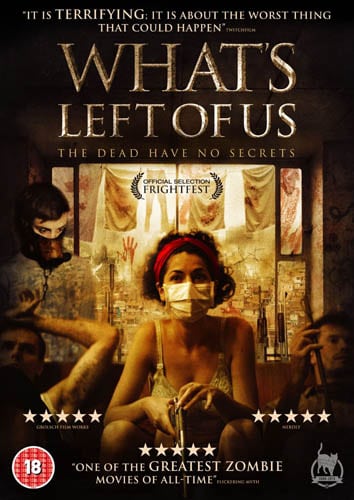
What's Left of Us (2013)
Scorn: When Ana rejects his love for her, Axel tattoos himself so he will be repulsive to her.
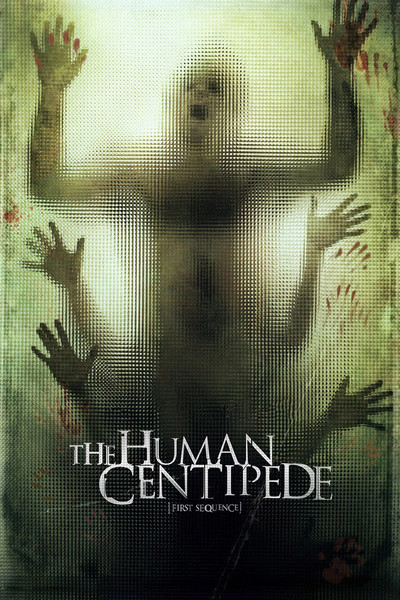
The Human Centipede (2009)
Insanity: A mad doctor wants to create new creatures, so he plays God by sewing women together, mouth to anus, to form a “human centipede.” He also severs tendons in their legs to prevent them from walking, ensuring, thereby, that they must crawl, as befits their new identity.
Taxidermia (2006)
Art for Art's Sake: After removing his own internal organs, a young man named Lajoska, arranges for a machine to decapitate him so he can become a grotesque statue.
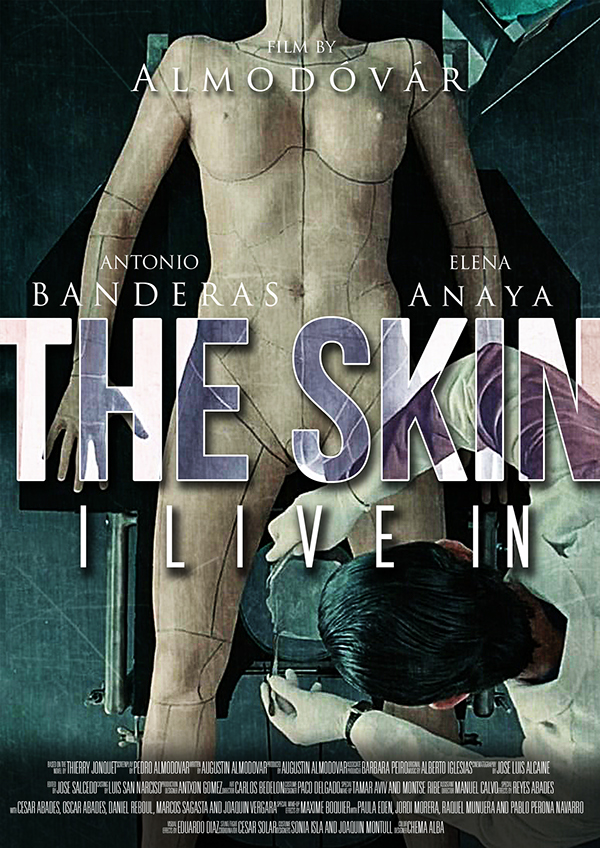
The Skin I Live In (2011)
Forced Feminization: Plastic surgeon Robert Ledgard performs a vaginoplasty on a captured man whom Ledgard plans to use as a replacement for his late wife.